Adult ADHD: Symptoms You May Be Missing in Everyday Life
Do you constantly forget appointments even after setting reminders? Do you start several tasks but struggle to finish them? Maybe you regularly underestimate how long things will take or find yourself distracted during important conversations.
It is easy to dismiss these experiences as being careless, lazy or simply “bad at managing time.”
But when these patterns have been present for years and repeatedly interfere with work, relationships or everyday responsibilities, they may deserve closer attention.
One possible explanation is Attention-Deficit/Hyperactivity Disorder (ADHD).
ADHD is often associated with children, but it can continue into adulthood. Some people reach adulthood without recognising that their difficulties with attention, organisation, impulsivity or restlessness may be related to ADHD.
Understanding how adult ADHD symptoms appear in everyday life can help you recognise when it may be useful to seek a professional assessment.
What Is Adult ADHD?
Adult ADHD is a developmental disorder characterised by persistent patterns of inattention and/or hyperactivity and impulsivity that interfere with everyday functioning.
ADHD begins during childhood, although some people are not diagnosed until adulthood.
The symptoms generally fall into three areas:
- Inattention – difficulty maintaining attention, organising tasks or remembering everyday responsibilities
- Hyperactivity – restlessness or a persistent need for activity
- Impulsivity – acting or speaking without sufficient consideration of consequences
Not every adult with ADHD appears visibly hyperactive.
For some adults, difficulties with attention, organisation and time management are much more noticeable than physical hyperactivity.
What Does ADHD Look Like in Adults?
Adult ADHD does not always look like someone constantly moving around or being unable to sit still.
It may look like:
- Missing deadlines
- Frequently losing your phone, wallet or keys
- Forgetting appointments
- Starting tasks without completing them
- Getting distracted during conversations
- Procrastinating until the last minute
- Struggling to organise your day
- Frequently being late
- Interrupting conversations
- Making impulsive decisions
- Feeling internally restless
- Finding routine tasks unusually difficult to complete
Many people occasionally experience some of these difficulties.
With ADHD, however, symptoms are persistent, occur across different situations and cause meaningful difficulties in everyday functioning.
10 Adult ADHD Symptoms You May Be Missing
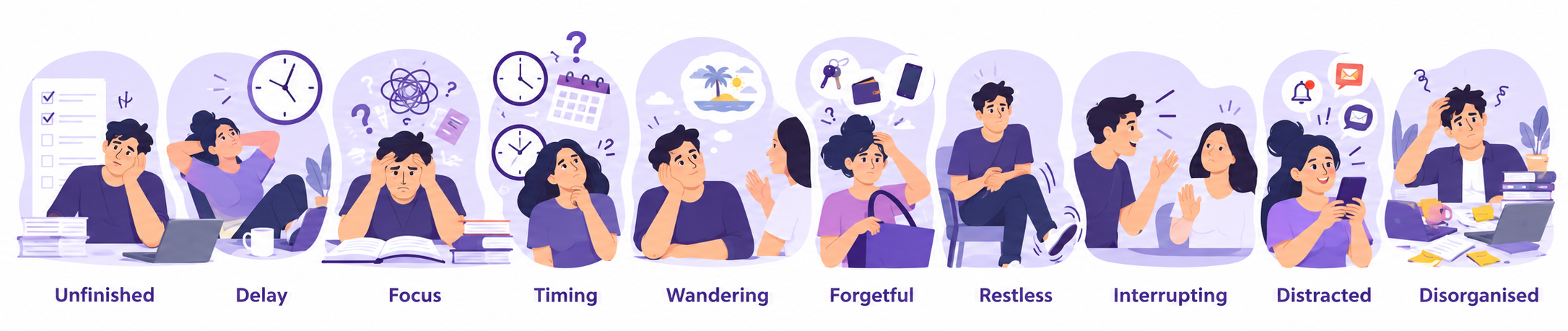
Some signs of ADHD can become so familiar that people consider them part of their personality.
Here are everyday patterns worth understanding.
1. You Start Tasks but Rarely Finish Them
Starting a new project may feel exciting.
Finishing it can be much harder.
You may begin cleaning one room, notice something else that needs attention and move to another task. By the end, several things have been started but nothing is completely finished.
The same pattern can occur at work.
You might open an email, switch to a spreadsheet, remember another task and then start working on something completely different.
Difficulty sustaining attention and following through on tasks can occur in ADHD.
However, occasional unfinished tasks are common and do not automatically indicate ADHD.
2. You Keep Procrastinating Even When the Task Is Important
Everyone procrastinates occasionally.
For some adults with ADHD, however, getting started on tasks requiring sustained mental effort can be particularly difficult.
You may repeatedly postpone:
- Paying bills
- Replying to emails
- Preparing reports
- Completing paperwork
- Studying
- Booking appointments
- Organising documents
You may understand that the task is important and genuinely intend to complete it.
Yet starting it can still feel unusually difficult.
This can sometimes be misunderstood by others as laziness or lack of motivation.
3. You Constantly Lose Everyday Items
Where are my keys?
Where did I put my phone?
Where is that important document?
Frequently misplacing essential belongings can be another pattern associated with ADHD.
Commonly misplaced items may include:
- Keys
- Wallets
- Phones
- ID cards
- Earphones
- Office documents
- Glasses
- Chargers
Occasionally losing things is normal.
The concern becomes more relevant when it happens repeatedly and causes significant disruption.
4. You Struggle With Time Management
You may genuinely believe something will take 20 minutes.
An hour later, you are still working on it.
Adults experiencing ADHD symptoms may have difficulty organising time, planning activities and meeting deadlines.
This may appear as:
- Frequently arriving late
- Underestimating travel time
- Missing deadlines
- Leaving work until the last moment
- Trying to fit too many activities into one day
Over time, these difficulties can create significant stress at work and at home.
5. Your Mind Wanders During Conversations
Someone may be speaking directly to you, but suddenly you realise you missed part of the conversation.
You were physically present.
Your attention was somewhere else.
This can create problems in relationships because partners, colleagues or family members may feel that you are not listening.
Difficulty sustaining attention during conversations, meetings, reading or lengthy tasks can occur in adults with ADHD.
6. You Forget Everyday Responsibilities
You may remember complicated information related to something you enjoy but somehow forget a simple appointment.
Examples can include:
- Forgetting meetings
- Missing appointments
- Forgetting to return calls
- Leaving household tasks unfinished
- Forgetting to pay bills
- Missing important dates
- Forgetting items while shopping
Repeated forgetfulness can affect both professional and personal life.
7. You Feel Restless Even When Sitting Still
Hyperactivity in adults may look different from childhood hyperactivity.
Instead of running around, an adult may experience an internal sense of restlessness.
You may:
- Tap your feet
- Move your hands constantly
- Frequently change sitting positions
- Find long meetings uncomfortable
- Feel the need to remain busy
- Find relaxing surprisingly difficult
- Some adults describe feeling as though their mind is constantly “on.”
8. You Interrupt People Without Intending To
Do you frequently finish other people's sentences?
Do you answer before someone finishes asking a question?
Do you suddenly realise that you have interrupted someone again?
Impulsivity can affect conversations.
The person may not intend to be disrespectful. They may feel a strong urge to say something before they forget it or may respond before fully considering the situation.
When frequent, this pattern can create difficulties in professional and personal relationships.
9. Small Distractions Easily Pull You Away From Work
You sit down to complete something important.
Then:
A notification appears.
Someone starts talking nearby.
You remember another task.
You check your phone.
Thirty minutes later, the original task remains unfinished.
Adults with ADHD may have difficulty maintaining attention when unrelated thoughts or environmental distractions compete for their focus.
This can become particularly noticeable in busy offices or while working from home.
10. Your Work and Personal Life Feel Constantly Disorganised
For some adults, ADHD appears less like obvious hyperactivity and more like persistent difficulty managing everyday life.
You may feel as though you are constantly catching up.
Your desk may become cluttered.
Emails accumulate.
Appointments get forgotten.
Deadlines appear suddenly.
Household tasks remain unfinished.
The important question is not whether you are occasionally disorganised.
It is whether these patterns are persistent and significantly interfere with your ability to function.
Can You Have ADHD Without Being Hyperactive?
Yes. An adult can have ADHD without obvious hyperactivity.
ADHD can involve predominantly inattentive symptoms, predominantly hyperactive-impulsive symptoms, or a combination of both.
Adults with predominantly inattentive symptoms may mainly struggle with:
- Concentration
- Organisation
- Forgetfulness
- Following through on tasks
- Managing time
- Distraction
This is one reason ADHD can sometimes remain unrecognised until adulthood.
Why Is ADHD Sometimes Missed Until Adulthood?
Some people develop coping strategies that help them manage symptoms during childhood.
Parents, teachers or structured school environments may also provide enough support to compensate for difficulties.
Problems may become more noticeable later when adult life requires greater independence.
For example:
School: Someone else creates much of your schedule.
Adult life: You manage your own job, finances, appointments, household, relationships and deadlines.
As responsibilities increase, difficulties with organisation, planning and attention may become more apparent.
Some adults may therefore seek an ADHD assessment only after experiencing difficulties at university, work or in relationships.
Is It ADHD or Just Stress?
Stress can cause concentration problems.
So can several other conditions.
Symptoms that resemble ADHD may occur with:
- Anxiety
- Depression
- Chronic stress
- Sleep disorders
- Substance use
- Certain medical conditions
- Other mental health conditions
This is why self-diagnosis based on an online checklist or social-media video is unreliable.
A psychiatrist evaluates the broader pattern of symptoms, their duration, childhood history, functional impact and possible alternative explanations.
Is It ADHD or Anxiety?
ADHD and anxiety can sometimes look similar.
Both may involve:
- Difficulty concentrating
- Restlessness
- Sleep difficulties
- Difficulty completing tasks
- Feeling mentally overwhelmed
However, the underlying reasons can be different.
Someone with anxiety may struggle to concentrate because their attention is repeatedly drawn towards worries.
Someone with ADHD may struggle because maintaining and directing attention itself is difficult.
ADHD and anxiety can also occur together.
A professional assessment helps distinguish between these possibilities.
Is It ADHD or Depression?
Depression can also cause:
- Poor concentration
- Low motivation
- Forgetfulness
- Difficulty completing tasks
- Reduced productivity
However, depression commonly involves persistent low mood or loss of interest or pleasure, along with other possible symptoms.
ADHD has a developmental pattern, with symptoms beginning during childhood even if they were not formally diagnosed at that time.
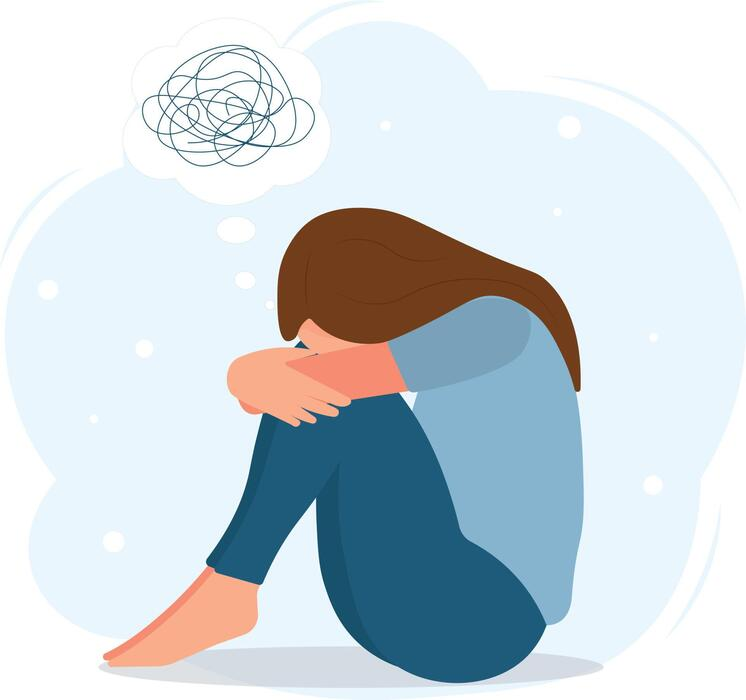
Because symptoms can overlap, assessment should consider the person's complete mental health history.
Can Adults Suddenly Develop ADHD?
ADHD is considered a developmental disorder, so symptoms begin during childhood rather than suddenly appearing for the first time in adulthood.
Current diagnostic criteria require evidence that several symptoms were present before age 12.
However, this does not mean ADHD must have been formally diagnosed during childhood.
Some adults recognise the pattern only later in life.
If concentration or organisational difficulties appear suddenly in adulthood without a previous history, a clinician may investigate other possible explanations.
How Is Adult ADHD Diagnosed?
There is no single blood test or brain scan that independently diagnoses ADHD.
A comprehensive assessment may include:
- Detailed discussion of current symptoms
- Childhood history
- School experiences
- Work and relationship functioning
- Medical history
- Mental health history
- Standardised ADHD questionnaires or rating scales
- Information from a partner or family member when appropriate
- Assessment for other conditions that may produce similar symptoms
For adults, ADHD symptoms must have originated before age 12, persisted over time, occur in more than one setting and cause meaningful impairment.
A psychiatrist may also evaluate for anxiety, depression, sleep problems, substance use and other conditions that could explain or accompany the symptoms.
How Is Adult ADHD Treated?
Adult ADHD can be managed with appropriate treatment.
Treatment is individualised according to symptoms, functional difficulties, medical history and other mental health conditions.
Management may involve:
Medication
Medication can be considered for appropriately diagnosed adults when clinically indicated.
Different medication options exist, and the choice should be made by a qualified clinician after assessment.
Medication should not be started based only on self-diagnosis.
Psychological Treatment
Psychological interventions may help adults develop strategies for managing:
- Organisation
- Planning
- Procrastination
- Time management
- Emotional responses
- Problem-solving
- Unhelpful thinking patterns
Cognitive Behavioural Therapy (CBT) may form part of treatment for some adults.
Practical Behavioural Strategies
Depending on individual needs, practical strategies may include:
- Breaking large tasks into smaller steps
- Using calendars and reminders
- Creating structured routines
- Reducing unnecessary distractions
- Keeping important objects in fixed locations
- Prioritising tasks
- Improving sleep habits
- Exercising regularly
Treatment should address the person's specific difficulties rather than applying the same approach to everyone.
When Should You See a Psychiatrist for Possible Adult ADHD?
Consider seeking a professional assessment when difficulties with attention, organisation, restlessness or impulsivity are persistent and repeatedly interfere with everyday life.
For example, you may notice problems with:
- Meeting work deadlines
- Maintaining concentration
- Managing finances
- Keeping appointments
- Completing important tasks
- Maintaining relationships
- Controlling impulsive behaviour
- Managing everyday responsibilities
An evaluation is particularly useful when these patterns have existed for many years or can be traced back to childhood.
Looking for an Adult ADHD Assessment in Mumbai?
If persistent problems with concentration, organisation, forgetfulness, restlessness or impulsivity are affecting your work, relationships or daily life, a psychiatric assessment can help determine what may be causing them.
Dr. Sanil Sinhasan, MBBS, MD Psychiatry, is a Consultant Psychiatrist & Sexologist in Mumbai with more than 10 years of experience in managing mental and sexual health concerns.
An assessment can help distinguish possible ADHD from conditions that may produce similar symptoms, including anxiety, depression, chronic stress and sleep problems.
Take the First Step Towards Understanding Your Symptoms
Struggling with concentration does not automatically mean you have ADHD.
But persistent symptoms that affect everyday life should not simply be ignored.
Consult Dr. Sanil Sinhasan, Psychiatrist in Mumbai, for an individual mental health assessment and appropriate treatment guidance.
Consultation locations: Tilaknagar, Chembur and Dadar, Mumbai.
Frequently Asked Questions About Adult ADHD
1. What are the most common symptoms of ADHD in adults?
Common adult ADHD symptoms include difficulty concentrating, poor organisation, procrastination, forgetfulness, losing belongings, poor time management, restlessness and impulsive behaviour. Symptoms need to be persistent and cause functional difficulties for ADHD to be considered.
2. How do I know if I have ADHD as an adult?
You cannot reliably diagnose ADHD yourself. A qualified mental health professional assesses current symptoms, childhood history, functioning in different areas of life and other conditions that could cause similar difficulties.
3. Can you develop ADHD in your 30s or 40s?
ADHD does not typically begin suddenly in the 30s or 40s. It is a developmental disorder, and diagnostic criteria require symptoms to have been present during childhood. However, some people are not diagnosed until adulthood.
4. Can someone with ADHD be successful at work?
Yes. Having ADHD does not determine a person's intelligence or potential. Symptoms and their impact vary considerably. Appropriate treatment and practical strategies can help adults manage difficulties and improve everyday functioning.
5. Can ADHD cause forgetfulness?
ADHD can involve forgetfulness in everyday activities, such as missing appointments, forgetting tasks or losing important belongings. However, forgetfulness has many possible causes and does not by itself indicate ADHD.
6. Is overthinking a symptom of ADHD?
People with ADHD may experience busy or rapidly shifting thoughts, but overthinking is not specific to ADHD. Repetitive thinking can also occur with anxiety, stress, depression and other conditions.
7. Is ADHD the same as anxiety?
No. ADHD and anxiety are different conditions, although some symptoms can overlap and both conditions can occur together. A professional assessment can help identify the cause of symptoms.
8. Can adult ADHD be treated?
Yes. Treatment can reduce symptoms and improve everyday functioning. Depending on individual needs, management may include medication, psychological interventions, behavioural strategies and practical support.
Medical Disclaimer: This information is for general educational purposes and is not intended for self-diagnosis or as a substitute for individual medical advice. Symptoms of ADHD can overlap with other mental and physical health conditions. Consult a qualified healthcare professional for an appropriate assessment.
The diagnostic safeguards here are important for YMYL content. NIMH states that adult ADHD symptoms should be persistent, impair functioning, occur across multiple settings and trace back to childhood before age 12; it also notes that anxiety, depression, sleep disorders and other conditions can produce similar symptoms. National Institute of Mental Health Treatment commonly includes medication and psychotherapy/behavioural approaches, depending on individual circumstances. National Institute of Mental Health

 WhatsApp