OCD Symptoms: When Do Repetitive Thoughts and Habits Become a Disorder?
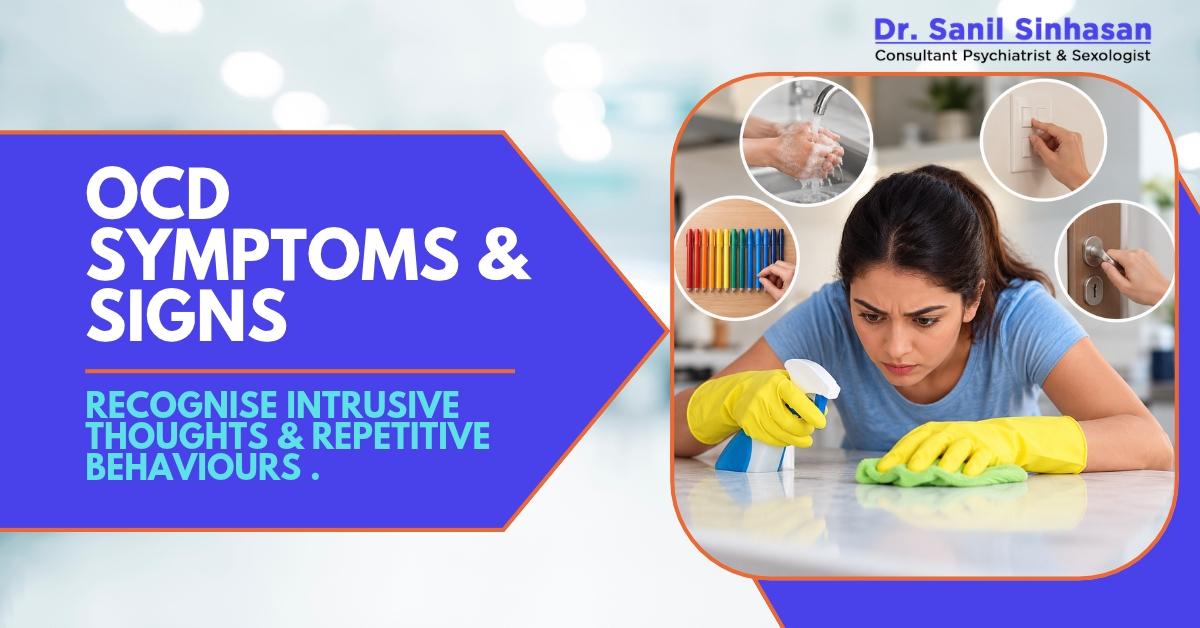
Did I lock the door?
What if my hands are still contaminated?
What if something bad happens because I did not check properly?
Most people occasionally double-check something, follow routines or experience unwanted thoughts.
That does not automatically mean they have Obsessive-Compulsive Disorder (OCD).
The difference becomes important when unwanted thoughts keep returning, create significant distress and lead to repetitive behaviours or mental rituals that feel difficult to resist.
For someone with OCD, checking a lock may not happen once. It may happen repeatedly. Washing hands may go far beyond normal hygiene. A disturbing thought may lead to repeated reassurance-seeking, counting, praying or mental checking.
So, when do repetitive thoughts and habits become OCD?
The answer depends on the nature of the thoughts and behaviours, how much time they consume, the distress they cause and how much they interfere with everyday life.
What Is OCD?
Obsessive-Compulsive Disorder (OCD) is a mental health disorder involving recurring, unwanted thoughts, urges or mental images called obsessions and/or repetitive behaviours or mental acts called compulsions.
Obsessions can cause significant anxiety or distress. Compulsions are often performed in an attempt to reduce that distress or prevent something feared from happening.
This can create a cycle:
Obsessive thought → Anxiety or distress → Compulsion → Temporary relief → Obsessive thought returns
The temporary relief provided by the compulsion can reinforce the cycle. Over time, the person may feel increasingly driven to repeat the behaviour.
What Are Obsessions in OCD?
Obsessions are recurring and unwanted thoughts, urges or mental images that are intrusive and cause anxiety or distress.
The person does not necessarily agree with or want these thoughts.
Common OCD obsessions may involve:
- Fear of germs or contamination
- Fear of making a serious mistake
- Fear of accidentally harming someone
- Fear of losing control
- Persistent doubts about whether something was done correctly
- Need for symmetry or exactness
- Unwanted aggressive thoughts
- Unwanted sexual thoughts
- Unwanted religious or moral thoughts
- Fear of being responsible for something bad happening
Some obsessions can feel embarrassing, disturbing or frightening. A person may therefore avoid telling anyone about them.
Importantly, having an unwanted thought does not mean you want it to happen or will act on it.
What Are Compulsions in OCD?
Compulsions are repetitive behaviours or mental acts that a person feels driven to perform, often in response to an obsession.
They are usually performed to reduce anxiety or prevent a feared outcome.
Common compulsions include:
- Excessive handwashing
- Repeated cleaning
- Checking locks repeatedly
- Checking appliances repeatedly
- Repeating certain actions
- Counting
- Arranging objects in a particular order
- Seeking reassurance repeatedly
- Repeating words or phrases mentally
- Praying repeatedly
- Mentally reviewing past events
- Avoiding situations that trigger obsessive thoughts
Not all compulsions are visible. Someone may appear completely still while repeatedly counting, praying, reviewing memories or trying to “neutralise†a disturbing thought internally.
OCD Symptoms: 10 Signs You Should Know
OCD can appear differently from person to person. Here are some patterns that may occur.
1. You Keep Checking Things Even After You Know They Are Safe
Checking something once is normal. With OCD, doubt may remain even after checking.
For example:
You lock the door.
Then check it.
Walk away.
Doubt appears.
“What if I didn't actually lock it?â€
You return and check again.
A few minutes later, the doubt returns.
This pattern may involve doors, appliances, taps, documents, messages or other responsibilities.
2. You Wash or Clean Excessively Because of Contamination Fears
Concern about hygiene is normal.
OCD-related contamination fears may lead to excessive:
- Handwashing
- Showering
- Cleaning
- Changing clothes
- Avoiding objects or surfaces
- Avoiding physical contact
The person may understand that the behaviour is excessive but still experience intense discomfort if they try to resist it.
3. You Constantly Seek Reassurance
Reassurance-seeking can become a compulsion. You might repeatedly ask:
- “Are you sure everything is okay?â€
- “Did I do something wrong?â€
- “Are you sure I didn't hurt anyone?â€
- “Do you think I'm a bad person?â€
The reassurance may provide temporary relief. But the doubt often returns, leading to another request for reassurance.
4. You Need Things to Feel “Just Right”
Some people experience intense discomfort when objects, actions or situations do not feel correct.
You may repeatedly:
- Rearrange objects
- Rewrite something
- Repeat an action
- Touch something a certain number of times
- Restart a task
- Adjust things until they feel right
This goes beyond simply preferring a tidy or organised environment.
The behaviour may feel difficult to resist.
5. You Experience Unwanted Intrusive Thoughts
Intrusive thoughts can involve subjects that feel frightening or completely inconsistent with your values.
They may involve:
- Harm
- Violence
- Sex
- Religion
- Morality
- Relationships
- Losing control
People can become frightened simply because the thought occurred.
They may ask:
“Why did I think that?”
“Does this thought say something about who I am?”
Trying to obtain absolute certainty about the meaning of the thought can itself become part of an obsessive-compulsive cycle.
6. You Repeat Actions a Specific Number of Times
Some people feel compelled to perform an action a particular number of times.
For example:
- Checking something four times
- Touching an object repeatedly
- Repeating a sentence
- Taking a certain number of steps
- Performing a routine in an exact sequence
The person may fear that something bad will happen or feel intense discomfort if the ritual is not completed correctly.
7. You Mentally Review Conversations or Events Again and Again
Compulsions are not always physical.
Mental reviewing can involve repeatedly analysing:
- A conversation
- A memory
- Something you said
- Something someone else said
- Whether you made a mistake
- Whether you caused harm
You may search your memory repeatedly for certainty.
But instead of resolving the doubt, repeated reviewing can keep it going.
8. You Avoid Situations That Trigger Your Thoughts
OCD can also influence what a person avoids.
For example, someone may avoid:
- Public toilets because of contamination fears
- Driving because of fear of causing an accident
- Cooking because of fear of harming someone
- Certain people because of intrusive thoughts
- Religious settings because of unwanted thoughts
- Sharp objects because of fears about losing control
Avoidance may gradually make everyday life more restricted.
9. Your Rituals Take Up Significant Time
One important distinction between an ordinary habit and OCD is how much time and disruption the symptoms create.
Repeated checking, cleaning, reviewing or other rituals may consume a substantial part of the day.
You may start getting ready for work at 8 a.m. but spend so much time checking things that you regularly leave late.
Or your bedtime routine may become prolonged because certain actions must be repeated until they feel correct.
10. You Know the Behaviour Is Excessive but Still Find It Difficult to Stop
Many adults with OCD recognise that their compulsions may be excessive or unreasonable.
That awareness does not necessarily make them easy to stop.
Trying to resist may produce significant anxiety or discomfort.
Performing the compulsion provides temporary relief.
Then the obsession returns.
This repeating pattern is one reason OCD can become so disruptive.
Habit vs OCD: What's the Difference?
Not every repeated behaviour is a compulsion. A habit may be something you do automatically or because you prefer doing it a certain way. OCD involves a different pattern.
| Ordinary Habit or Preference | Possible OCD Pattern |
|---|---|
| Checking the door once before leaving | Returning repeatedly to check the lock |
| Washing hands after using the toilet | Washing repeatedly because contamination still feels present |
| Preferring an organised desk | Feeling intense distress if objects are not arranged exactly |
| Occasionally asking for reassurance | Repeatedly seeking reassurance because doubt keeps returning |
| Having an unwanted thought | Becoming trapped in repeated attempts to neutralise or gain certainty about the thought |
| Following a bedtime routine | Feeling unable to sleep until a ritual has been completed correctly |
The presence of one behaviour does not diagnose OCD. The overall pattern, distress, time involved and impact on everyday functioning matter.
When Do Repetitive Thoughts Become OCD?
Having occasional intrusive or unwanted thoughts is common.
They become more concerning when they are:
- Persistent
- Intrusive
- Unwanted
- Difficult to control
- Highly distressing
- Time-consuming
- Associated with repetitive rituals
- Interfering with everyday functioning
People with OCD may spend significant amounts of time dealing with obsessions and compulsions.
A commonly used diagnostic indicator is symptoms taking more than one hour per day, although the diagnosis depends on a broader clinical assessment.
Are Intrusive Thoughts Normal?
Yes. People without OCD can also experience strange, upsetting or unwanted thoughts.
The presence of an intrusive thought alone does not mean someone has OCD.
The difference often involves what happens after the thought appears.
For example:
An intrusive thought appears.
Someone without OCD may notice it and eventually move on.
Someone experiencing OCD may become highly distressed by what the thought means and feel driven to check, seek reassurance, avoid something or perform a mental ritual.
The response to the thought can therefore become an important part of the OCD cycle.
Do Intrusive Thoughts Mean You Want to Act on Them?
No. An unwanted intrusive thought does not automatically reflect a person's intentions, character or desires.
OCD can involve disturbing thoughts about harm, sex, religion or other sensitive subjects.
These thoughts may be especially distressing precisely because they conflict with the person's values.
People can become frightened by the presence of the thought itself.
A qualified mental health professional can assess intrusive thoughts in context and distinguish OCD-related symptoms from other concerns.
Is Repeated Checking Always OCD?
No.
Checking whether you locked your door or switched off an appliance is normal.
Repeated checking becomes more concerning when:
- You cannot trust your memory after checking
- You repeatedly return to check
- Checking consumes significant time
- Trying not to check causes intense distress
- Checking makes you late
- The behaviour interferes with everyday life
The same principle applies to cleaning, counting and other repetitive behaviours.
Is Overthinking the Same as OCD?
No.
Overthinking is a broad term commonly used to describe repetitive thinking.
OCD is a specific mental health disorder involving obsessions, compulsions or both.
Someone may overthink because of:
- Stress
- Anxiety
- Depression
- Relationship problems
- Perfectionism
- Major life changes
OCD can also involve repetitive thinking, but its diagnosis requires a specific clinical pattern.
Therefore, repeatedly thinking about something does not automatically mean you have OCD.
Is OCD the Same as Anxiety?
No.
OCD and anxiety disorders are separate conditions, although anxiety and distress are commonly involved in OCD.
For example, an obsession may trigger intense anxiety.
A person then performs a compulsion to reduce that anxiety.
The relief is often temporary.
The obsession returns, restarting the cycle.
OCD can also occur alongside an anxiety disorder or depression.
How Is OCD Diagnosed?
There is no single blood test or brain scan that independently diagnoses OCD.
A psychiatrist or other qualified mental health professional may assess:
- The nature of your intrusive thoughts
- Repetitive behaviours
- Mental rituals
- How often symptoms occur
- How much time they consume
- How much distress they cause
- Whether you can resist them
- Their effect on work, relationships and everyday life
- Other mental health symptoms
- Medical history
It is important to discuss symptoms openly, including intrusive thoughts that may feel embarrassing.
Mental health professionals are familiar with the wide range of obsessions that can occur in OCD.
Can OCD Be Treated?
Yes. Effective treatments are available for OCD.
Treatment depends on the severity of symptoms, individual circumstances and other health considerations.
Cognitive Behavioural Therapy and ERP
A particularly important psychological treatment for OCD is Cognitive Behavioural Therapy (CBT) incorporating Exposure and Response Prevention (ERP).
ERP involves gradually and safely confronting situations or thoughts that trigger obsessions while learning not to perform the usual compulsion.
For example, someone with contamination-related OCD may gradually work with a trained therapist to face contamination fears without immediately performing the usual washing ritual.
ERP should be appropriately planned and guided according to the person's needs.
Medication
Medication may also be recommended for some people with OCD.
Selective serotonin reuptake inhibitors (SSRIs), a type of antidepressant, are commonly used in OCD treatment.
Medication choice, dosage, duration and monitoring should be determined by a qualified medical professional.
Some people may benefit from psychotherapy, medication or a combination of both.
When Should You Consult a Psychiatrist for OCD Symptoms?
Consider seeking professional help if intrusive thoughts or repetitive behaviours:
- Consume a significant amount of your day
- Cause considerable distress
- Interfere with work or studies
- Affect relationships
- Disrupt sleep
- Make you repeatedly late
- Lead to significant avoidance
- Feel increasingly difficult to control
- Continue despite attempts to stop them

You do not need to wait until symptoms become severe before discussing them with a mental health professional.
Looking for OCD Treatment in Mumbai?
If intrusive thoughts, repeated checking, excessive cleaning, reassurance-seeking or mental rituals are interfering with your everyday life, a professional mental health assessment can help determine whether OCD or another condition may be contributing to your symptoms.
Dr. Sanil Sinhasan, MBBS, MD Psychiatry, is a Consultant Psychiatrist & Sexologist in Mumbai with more than 10 years of experience in managing mental and sexual health concerns.
An individual psychiatric assessment can help identify the nature and severity of your symptoms and determine an appropriate treatment approach.
Repetitive Thoughts Do Not Have to Control Your Day
OCD is more than simply liking things clean, organised or perfect. When obsessions and compulsions cause distress or interfere with everyday life, professional treatment can help manage symptoms and improve functioning.
Consult Dr. Sanil Sinhasan, Psychiatrist in Mumbai, for assessment and treatment guidance for OCD symptoms and related mental health concerns.
Consultation locations: Tilaknagar, Chembur and Dadar, Mumbai.
Frequently Asked Questions About OCD
1. What are the first signs of OCD?
Possible signs include recurring unwanted thoughts, repeated checking, excessive cleaning, counting, arranging, reassurance-seeking or mental rituals that become difficult to resist and cause significant distress or disruption.
2. How do I know if my habits are OCD?
A repeated habit does not automatically indicate OCD. OCD is more likely to involve unwanted obsessions and/or compulsions that are difficult to control, time-consuming, distressing or interfere with everyday functioning. Diagnosis requires professional assessment.
3. Is constantly checking things a sign of OCD?
Repeated checking can be a compulsion in OCD, particularly when it is driven by persistent doubt or fear and becomes difficult to resist. Occasional checking is normal.
4. Are intrusive thoughts a symptom of OCD?
Intrusive, unwanted and recurring thoughts can be obsessions in OCD. However, people without OCD can also experience intrusive thoughts. Their persistence, associated distress, compulsions and impact on functioning are important.
5. Can you have OCD without cleaning compulsions?
Yes. OCD is not limited to contamination or cleaning. Symptoms may involve checking, counting, symmetry, reassurance-seeking, harm-related fears, unwanted sexual or religious thoughts and mental rituals.
6. Can OCD compulsions happen only in your mind?
Yes. Compulsions can be mental. Examples may include repeated counting, praying, reviewing memories or silently repeating phrases in an attempt to reduce distress.
7. Is OCD just overthinking?
No. Overthinking is a broad description of repetitive thinking. OCD is a recognised mental health disorder involving a specific pattern of obsessions and/or compulsions that causes distress or interferes with functioning.
8. Can OCD be treated successfully?
OCD symptoms can often be effectively managed. Evidence-based treatments include CBT with Exposure and Response Prevention (ERP), medication when appropriate, or a combination depending on individual needs.
9. When should I see a psychiatrist for OCD?
Consider an assessment when intrusive thoughts, compulsions or rituals are difficult to control, take significant time, cause substantial distress or interfere with work, studies, relationships or everyday activities.

 WhatsApp