When Should You See a Psychiatrist? 10 Signs You May Need Professional Help in Mumbai
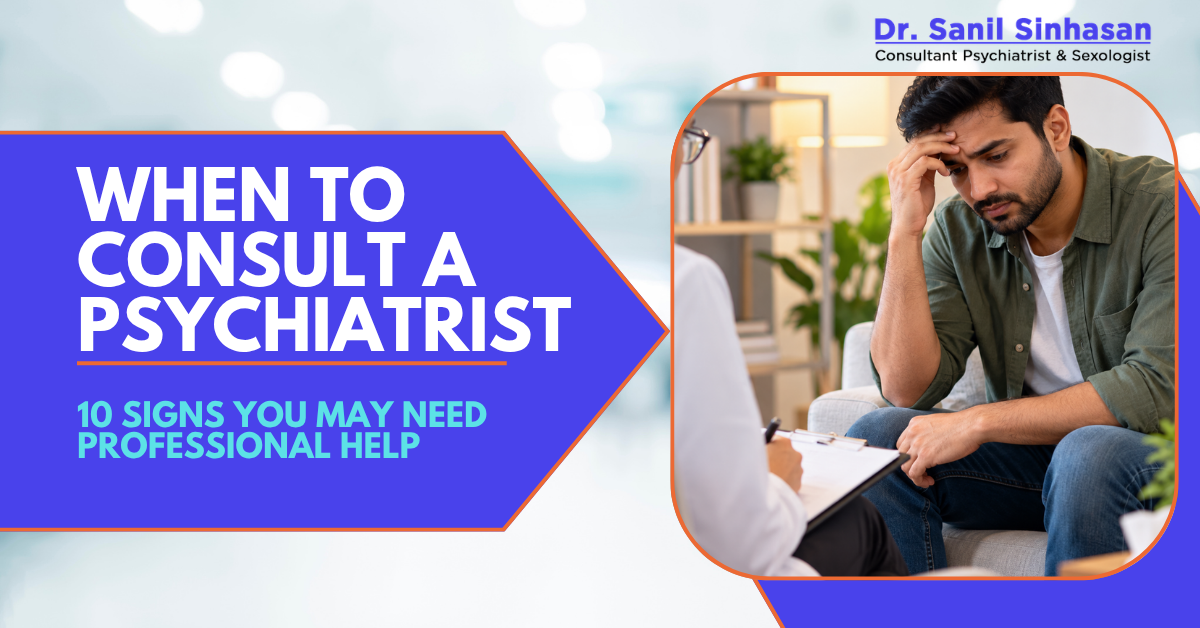
Everyone experiences difficult days.
You may feel stressed because of work. You may have trouble sleeping before an important event. A relationship problem may leave you feeling low or anxious for a few days.
These experiences do not always mean you have a mental health disorder.
But what happens when the sadness does not improve? What if anxiety starts controlling your decisions? What if you cannot sleep properly for weeks, struggle to concentrate at work or no longer enjoy things you once liked?
These may be signs that it is time to speak with a mental health professional.
A psychiatrist can assess emotional, behavioural and psychological symptoms, identify possible mental health conditions and recommend an appropriate treatment plan.
Here are 10 signs you may need to consult a psychiatrist in Mumbai and what you can expect from your first appointment.
What Does a Psychiatrist Do?
A psychiatrist is a medical doctor who specialises in the diagnosis, treatment and management of mental health disorders.
Psychiatrists can assess conditions such as:
- Anxiety disorders
- Depression
- Obsessive-Compulsive Disorder (OCD)
- Attention-Deficit/Hyperactivity Disorder (ADHD)
- Bipolar disorder
- Panic disorder
- Sleep-related mental health problems
- Stress-related problems
- Psychotic disorders
- Substance-related mental health problems
- Sexual and relationship-related psychological concerns

Because psychiatrists are medical doctors, they can evaluate mental health symptoms in the context of physical health, medications and other factors.
Treatment may involve psychotherapy or counselling approaches, medication when clinically appropriate, behavioural strategies, lifestyle changes or a combination of approaches.
When Should You See a Psychiatrist?
There is no rule that says you must wait until your symptoms become severe.
Consider seeking professional help when emotional or behavioural changes are persistent, distressing or interfering with your work, relationships, studies, sleep or everyday responsibilities.
Here are 10 signs worth paying attention to.
1. You Feel Sad, Empty or Hopeless for Weeks
Everyone feels sad occasionally. Persistent sadness is different. You may notice that you:
- Feel low most days
- Feel hopeless about the future
- Cry frequently
- Feel emotionally empty
- Experience excessive guilt or worthlessness
- Have very little motivation
- Struggle to get out of bed
- Feel disconnected from everyday life
If these symptoms persist or start interfering with everyday functioning, they deserve attention.
Persistent low mood and loss of interest can occur with depression, although diagnosis requires assessment of the complete pattern of symptoms. You do not need to wait until your symptoms become unbearable before asking for help.
2. Anxiety Is Starting to Control Your Everyday Life
Feeling nervous before an interview, examination or important meeting is normal. Anxiety becomes more concerning when worry is persistent, difficult to control or begins changing how you live. You may:
- Worry excessively
- Constantly expect something bad to happen
- Overthink everyday decisions
- Avoid social situations
- Feel restless
- Find it difficult to concentrate
- Experience physical tension
- Have difficulty sleeping
- Repeatedly seek reassurance
You may even recognise that your worry is excessive but still find it difficult to stop.
A psychiatrist can assess whether your symptoms may be related to an anxiety disorder, chronic stress or another condition and recommend appropriate management through effective anxiety treatments.
3. You Are Experiencing Panic Attacks
A panic attack can feel frightening. Symptoms may include:
- Sudden intense fear
- Rapid heartbeat
- Sweating
- Trembling
- Shortness of breath
- Chest discomfort
- Dizziness
- Feeling that you are losing control
After experiencing a panic attack, some people become afraid of having another one.
They may begin avoiding places, travel or situations where they fear another attack could occur.
If panic attacks are recurring or changing how you live your life, consider seeking a mental health assessment. Learn more about how panic disorder differs from generalized anxiety.
Because symptoms such as chest pain or shortness of breath can also have physical causes, new, severe or unexplained symptoms may require appropriate medical evaluation.
4. You Have Lost Interest in Things You Once Enjoyed
Think about activities that normally make you happy.
- Meeting friends
- Playing a sport
- Watching films
- Spending time with family
- Listening to music
- Going out
What if none of them feels enjoyable anymore?
A persistent loss of interest or pleasure can be an important mental health symptom, particularly when it occurs alongside low mood, fatigue, sleep changes or feelings of hopelessness.
- You may begin declining invitations.
- You may stop pursuing hobbies.
- Eventually, your routine may become limited to completing essential responsibilities.
If this continues, professional assessment can help identify what may be contributing to the change.
5. Your Sleep Has Changed Significantly
Sleep and mental health are closely connected. Mental health difficulties can interfere with sleep, while persistent sleep problems can also affect emotional well-being.
You may experience:
- Difficulty falling asleep
- Waking repeatedly during the night
- Waking much earlier than intended
- Sleeping excessively
- Racing thoughts at bedtime
- Feeling tired despite spending enough time in bed
Persistent sleep disturbance can occur alongside anxiety, depression, stress and other mental health conditions.
However, sleep problems can also have physical or sleep-specific causes. Consulting a doctor for insomnia and sleep disorder management can provide an accurate diagnosis.
6. Your Concentration and Work Performance Are Getting Worse
Are tasks that once felt manageable becoming unusually difficult?
You may:
- Struggle to concentrate during meetings
- Forget important responsibilities
- Make repeated mistakes
- Miss deadlines
- Have difficulty making simple decisions
- Procrastinate excessively
- Feel mentally exhausted
- Struggle to organise your day
Concentration difficulties can occur with several conditions, including anxiety, depression, adult ADHD, chronic stress and sleep problems.
They can also have non-psychiatric causes.
A psychiatrist can look at the broader pattern rather than treating poor concentration as a diagnosis by itself.
This is particularly important when the problem begins affecting your career, studies or everyday responsibilities
7. Repetitive Thoughts or Behaviours Are Taking Over Your Day
You check whether the door is locked. Then you check again. A few minutes later, doubt returns. Or perhaps you repeatedly wash your hands because you still feel contaminated.
You may experience intrusive thoughts and feel compelled to:
- Check
- Wash
- Count
- Arrange
- Repeat
- Seek reassurance
- Perform mental rituals
Occasional repetitive behaviours do not automatically indicate Obsessive-Compulsive Disorder (OCD).
However, obsessions and compulsions become concerning when they are difficult to control, cause significant distress, consume considerable time or interfere with everyday life.
A psychiatric evaluation can help determine whether the pattern requires structured OCD treatment.
8. Your Mood Changes Feel Extreme or Difficult to Manage
Everyone's mood changes. But significant changes in mood, energy, activity or behaviour may sometimes require assessment.
For example, periods of unusually elevated or irritable mood may occur alongside:
- Increased energy
- Reduced need for sleep
- Rapid speech
- Racing thoughts
- Increased activity
- Impulsive decisions
- Risk-taking behaviour
These symptoms can have different causes and should not be self-diagnosed as bipolar disorder based on an online checklist.
If you or your family notice substantial changes in mood, sleep, energy or behaviour, consider discussing them with a psychiatrist.
9. Your Relationships Are Being Affected by Your Mental Health
Mental health symptoms do not always remain inside your mind. They can affect the people around you. You may notice:
- Frequent arguments
- Irritability
- Emotional withdrawal
- Difficulty communicating
- Reduced intimacy
- Sexual health concerns and intimacy difficulties
- Jealousy or persistent insecurity
- Avoiding your partner
- Difficulty controlling anger
- Repeated reassurance-seeking
Sometimes people seek psychiatric help because their relationship is suffering before they recognise that anxiety, depression, stress, sexual concerns or another mental health problem may be contributing.
A psychiatrist can assess the broader emotional and behavioural pattern and determine whether individual treatment or another form of support may be appropriate.
10. You Are Using Alcohol or Other Substances to Cope
Some people use alcohol or other substances to temporarily escape:
- Anxiety
- Stress
- Sadness
- Loneliness
- Sleep problems
- Difficult memories
- Relationship difficulties
What begins as occasional coping can become increasingly frequent.
You may notice that you need alcohol or another substance to relax, sleep, socialise or manage difficult emotions.
If substance use is becoming difficult to control or is affecting your health, work, relationships or responsibilities, professional assessment is important.
Mental health and substance-use problems can also occur together and may need to be addressed together. Dual diagnosis—where mental health and substance-use difficulties co-occur—requires coordinated deaddiction and psychiatric support.
When Should You Seek Urgent Mental Health Help?
Some mental health symptoms require immediate medical attention. Seek urgent professional or emergency help if you or someone you know:
- Has thoughts of suicide or self-harm
- Has plans or intentions to harm themselves
- Is at immediate risk of harming another person
- Experiences severe confusion
- Becomes extremely agitated or aggressive
- Hears voices instructing them to cause harm
- Experiences rapidly worsening hallucinations
- Appears significantly disconnected from reality
Do not wait for a routine psychiatric appointment when there is an immediate safety concern.
Contact local emergency medical services or go to the nearest hospital emergency department.
Psychiatrist vs Psychologist: Who Should You See?
This is a common question.
Both psychiatrists and psychologists can play important roles in mental healthcare, but their professional training differs.
Psychiatrist
A psychiatrist is a medical doctor specialising in mental health.
A psychiatrist can:
- Assess mental health symptoms
- Diagnose psychiatric conditions
- Evaluate medical factors that may affect mental health
- Prescribe medication when appropriate
- Monitor medication response and side effects
- Recommend or provide appropriate psychological treatment
Psychologist
A psychologist is trained in psychological assessment and therapeutic interventions.
Depending on their qualifications and area of practice, psychologists may provide:
- Psychological assessment
- Psychotherapy
- Cognitive Behavioural Therapy
- Behavioural interventions
- Counselling and psychological support
Psychiatrists and psychologists may also work together.
For example, a psychiatrist may manage diagnosis and medication while a psychologist provides structured psychotherapy.
The appropriate professional depends on your symptoms and treatment needs.
Do you need severe symptoms before seeing a psychiatrist?
No.
You do not have to wait for a mental health crisis before seeking help.
Professional assessment can be useful when symptoms are persistent, worsening or beginning to interfere with your quality of life.
For example:
- Mild stress lasting a few days may improve with rest and self-care.
- Persistent anxiety affecting sleep and work may require professional assessment.
- Occasional sadness after a difficult event may be understandable.
- Persistent low mood, hopelessness and loss of interest deserve closer attention.
The key indicators are:
How long have the symptoms lasted?
How severe are they?
How much are they interfering with your everyday life?
What Happens During Your First Psychiatrist Appointment?
Your first psychiatric consultation is primarily about understanding what you are experiencing.
The psychiatrist may ask about:
- Your main symptoms
- When they started
- How often they occur
- Their severity
- Sleep
- Appetite
- Energy levels
- Concentration
- Work or academic functioning
- Relationships
- Medical conditions
- Current medications
- Alcohol or substance use
- Previous mental health treatment
- Family mental health history
Depending on your symptoms, additional medical evaluation or investigations may sometimes be appropriate.
Try to describe your symptoms openly.
There is no need to arrive already knowing your diagnosis.
Determining what may be causing your symptoms is part of the assessment.
Does Seeing a Psychiatrist Mean You Will Need Medication?
No. Seeing a psychiatrist does not automatically mean you will be prescribed psychiatric medication.
Treatment depends on the condition, symptom severity and individual circumstances.
A treatment plan may involve:
- Psychological therapy
- Cognitive Behavioural Therapy (CBT)
- Counselling
- Behavioural strategies
- Stress-management techniques
- Sleep interventions
- Lifestyle modifications
- Medication when clinically appropriate
- A combination of approaches
Treatment should be individualised rather than using the same approach for every patient.
How Do You Choose a Psychiatrist in Mumbai?
When looking for a psychiatrist in Mumbai, consider practical and clinical factors rather than choosing solely based on online claims.
You may want to consider:
- Medical qualifications
- Experience with your particular concern
- Accessibility of the clinic
- Communication style
- Approach to diagnosis and treatment
- Availability for follow-up
- Whether psychotherapy, medication or combined treatment can be coordinated when required
During your consultation, you should also feel able to ask questions about the diagnosis, treatment options, expected benefits and possible side effects of treatment.
What Conditions Can a Psychiatrist Help With?
People consult psychiatrists for many different concerns.
These can include:
- Anxiety Disorders: Persistent worry, nervousness, avoidance and anxiety that interferes with everyday life.
- Depression: Persistent low mood, loss of interest, low energy, hopelessness and associated symptoms.
- Panic Disorder: Repeated panic attacks accompanied by ongoing fear or behavioural changes.
- Obsessive-Compulsive Disorder (OCD): Recurring unwanted thoughts and repetitive behaviours or mental rituals.
- Adult ADHD: Persistent problems involving attention, organisation and/or hyperactivity and impulsivity originating during childhood.
- Bipolar Disorder: Episodes involving significant changes in mood, energy and activity.
- Sleep Problems: Persistent insomnia or sleep disturbance when psychological or psychiatric factors may be involved.
- Stress-Related Problems: Difficulty coping with persistent occupational, relationship or personal stress.
- Sexual Health Concerns: Psychological factors can contribute to sexual difficulties, including performance anxiety and some problems involving desire or sexual functioning.
A psychiatrist can also assess many other emotional, behavioural and psychiatric concerns.
Why Early Mental Health Support Matters
People sometimes postpone seeking help because they think:
“My problem isn't serious enough.”
“Other people have bigger problems.”
You do not need to compare your symptoms with someone else's.
If something is persistently affecting your ability to work, sleep, maintain relationships or enjoy everyday life, it deserves attention.
Early assessment can help identify the problem and determine appropriate next steps.
Looking for a Psychiatrist in Mumbai?
If persistent anxiety, low mood, panic attacks, sleep problems, OCD symptoms, concentration difficulties or other mental health concerns are affecting your everyday life, consider seeking an individual psychiatric assessment.
Dr. Sanil Sinhasan, MBBS, MD Psychiatry, is a Consultant Psychiatrist & Sexologist in Mumbai with more than 10 years of clinical experience in treating complex mental and sexual health conditions.
Dr. Sinhasan consults at locations in Tilaknagar, Chembur and Dadar, Mumbai, making psychiatric consultations accessible from different parts of the city:
- Mind Care Clinic – Tilaknagar / Chembur West, Mumbai
- Rainbow Polyclinic – Tilaknagar Signal, Chembur, Mumbai
- Zenith Medical Centre – Kohinoor Square, Dadar West, Mumbai
Take the First Step Towards Better Mental Health
You do not need to wait until emotional difficulties become an overwhelming crisis. Understanding what is causing your symptoms is the first step towards feeling better and regaining control of your life.
Book a consultation with Dr. Sanil Sinhasan, Psychiatrist in Mumbai, for an individual mental health assessment and treatment guidance.
Call: +91 93247 30370
Consultation locations: Tilaknagar, Chembur and Dadar, Mumbai.
Book AppointmentFrequently Asked Questions
1. When should I see a psychiatrist?
Consider seeing a psychiatrist when emotional, behavioural or psychological symptoms persist, cause significant distress or interfere with work, relationships, studies, sleep or everyday responsibilities.
2. What are the signs that I need psychiatric help?
Possible signs include persistent sadness, excessive anxiety, panic attacks, loss of interest, major sleep changes, concentration problems, intrusive thoughts, compulsive behaviours, significant mood changes or difficulty functioning normally.
3. Should I see a psychiatrist for anxiety?
Consider professional assessment if anxiety is persistent, difficult to control, causes significant distress or begins interfering with sleep, work, relationships or everyday activities.
4. Can I see a psychiatrist even if my symptoms are mild?
Yes. You do not have to wait until symptoms become severe. If symptoms persist, worsen or concern you despite self-care, discussing them with a qualified healthcare professional can help determine the next step.
5. Does seeing a psychiatrist mean I need medication?
No. Psychiatric treatment does not automatically involve medication. Depending on your symptoms and diagnosis, treatment may involve psychotherapy, behavioural strategies, lifestyle measures, medication or a combination.
6. What happens during the first psychiatrist appointment?
A psychiatrist typically asks about your symptoms, when they began, their impact on everyday life, sleep, mood, medical history, medications and relevant personal or family history. This information helps guide assessment and treatment planning.
7. What is the difference between a psychiatrist and a psychologist?
A psychiatrist is a medical doctor specialising in mental health who can diagnose psychiatric disorders and prescribe medication. Psychologists are trained in psychological assessment and therapies. They may work together depending on a patient's needs.
8. Can a psychiatrist help with sleep problems?
Yes, particularly when persistent sleep problems may be related to anxiety, depression, stress or another psychiatric condition. Sleep problems can also have physical causes, so appropriate assessment is important.
9. Can a psychiatrist help with sexual health problems?
Psychiatrists with relevant expertise can assess psychological and psychiatric factors contributing to sexual health concerns, such as anxiety, depression, stress and performance anxiety. Physical causes may also require appropriate medical evaluation.
10. Where can I consult a psychiatrist in Mumbai?
Dr. Sanil Sinhasan, MBBS, MD Psychiatry, provides psychiatric consultations at clinics in Tilaknagar, Chembur and Dadar, Mumbai. Appointments can be booked by calling +91 93247 30370.

 WhatsApp