When Should You See a Sexologist? Common Sexual Health Problems Treated in Mumbai
Sexual health problems are common, but many people hesitate to discuss them.
You may notice difficulty maintaining an erection. You may ejaculate sooner than you would like. Your interest in sex may have decreased. Or anxiety about sexual performance may be making intimacy stressful.
Occasional changes in sexual function do not always indicate a disorder. Stress, tiredness, relationship difficulties, alcohol, medications and physical health can temporarily affect sexual function.
However, when a sexual problem keeps happening, causes distress or affects your relationship and quality of life, it may be time to seek professional help.
A sexologist in Mumbai can evaluate possible physical, psychological, relationship and lifestyle factors contributing to sexual difficulties and recommend appropriate treatment or referral.
What Does a Sexologist Do?
A sexologist or clinician specialising in sexual medicine evaluates problems related to sexual desire, arousal, orgasm, ejaculation, sexual performance and other aspects of sexual well-being.
People may seek help for concerns such as:
- Erectile dysfunction
- Premature ejaculation
- Delayed ejaculation
- Low sexual desire
- Difficulty reaching orgasm
- Sexual performance anxiety
- Psychological factors affecting sexual function
- Relationship-related sexual difficulties
- Concerns about sexual behaviour
- Sexual problems associated with anxiety or depression
Sexual difficulties do not always have a single cause.
For example, erectile dysfunction may involve physical factors such as diabetes or cardiovascular risk factors, psychological factors such as anxiety and stress, medication effects, lifestyle factors, or a combination.
A proper assessment therefore focuses on identifying the cause rather than treating every sexual problem in the same way.
When Should You See a Sexologist?
You may consider consulting a sexologist when a sexual concern:
- Keeps happening
- Causes significant distress
- Affects your confidence
- Makes you avoid intimacy
- Creates tension in your relationship
- Causes persistent worry before sex
- Has appeared suddenly without an obvious explanation
- Continues despite attempts to manage it yourself
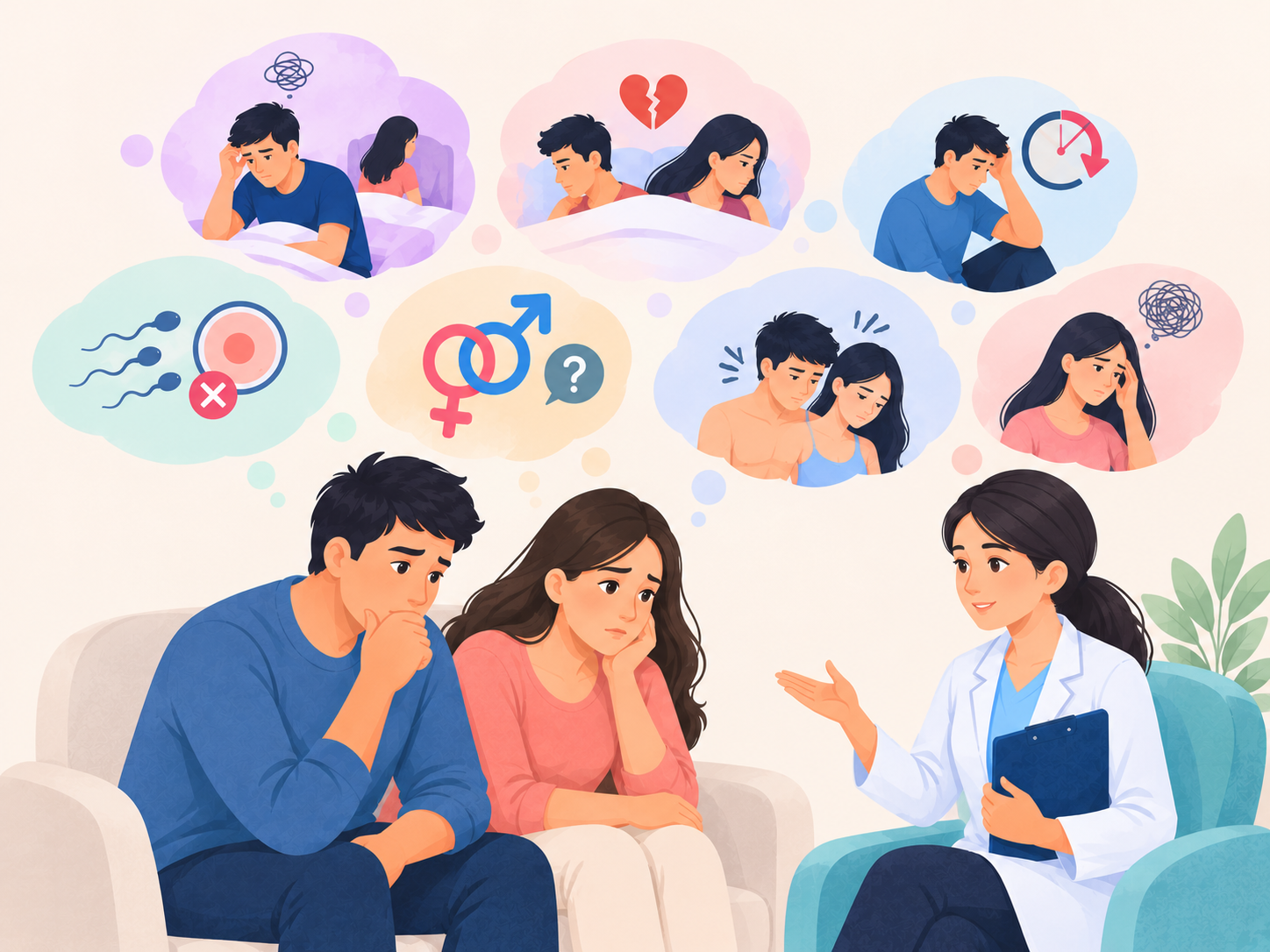
You do not need to wait until a sexual problem becomes severe.
Here are some of the common concerns for which people seek professional help.
1. You Have Difficulty Getting or Maintaining an Erection
Occasional erection difficulties can happen.
Stress, tiredness or excessive alcohol can temporarily affect erections.
But when difficulty getting or maintaining an erection keeps happening, it may be erectile dysfunction (ED).
Erectile dysfunction can involve:
- Difficulty getting an erection
- Difficulty maintaining an erection long enough for sexual activity
- Erections that are less firm than previously
- Anxiety about whether an erection will occur
ED can have psychological and physical causes.
Possible contributing factors include:
- Anxiety
- Sexual performance anxiety
- Depression
- Relationship stress
- Diabetes
- High blood pressure
- High cholesterol
- Hormonal problems
- Certain medications
- Smoking
- Excessive alcohol use
Persistent ED should not simply be assumed to be “all in your mind.”
A medical evaluation can help determine whether physical, psychological or combined factors may be involved.
2. You Ejaculate Earlier Than You Want
Premature ejaculation (PE) is a common sexual concern.
Occasionally ejaculating earlier than intended does not necessarily mean you have a sexual disorder.
The problem becomes more relevant when early ejaculation is persistent, difficult to control and causes distress for you or your partner.
You may experience:
- Ejaculation sooner than desired
- Difficulty delaying ejaculation
- Anxiety before sexual activity
- Reduced sexual confidence
- Avoidance of intimacy
- Relationship frustration
Premature ejaculation can involve psychological and physical factors.
Stress, depression, relationship difficulties and sexual performance anxiety may contribute in some people.
A professional assessment can help identify the pattern and determine appropriate treatment.
3. You Have Lost Interest in Sex
Sexual desire naturally varies between people and can change at different stages of life.
However, a persistent reduction in sexual desire can become concerning when it causes distress or affects a relationship.
Low libido can be associated with:
- Stress
- Anxiety
- Depression
- Relationship difficulties
- Fatigue
- Certain medications
- Excessive alcohol use
- Hormonal changes
- Chronic medical conditions
- Other sexual difficulties
Treatment depends on the underlying cause.
This is why simply taking supplements or sexual-performance medicines without identifying the reason for reduced desire may not address the actual problem.
4. Anxiety Is Affecting Your Sexual Performance
Sexual performance anxiety can create a difficult cycle.
You may begin thinking:
“What if I cannot get an erection?”
“What if I ejaculate too quickly?”
“What if my partner is disappointed?”
That anxiety makes it difficult to relax.
A difficult sexual experience then increases anxiety before the next encounter.
The cycle can become:
Fear of poor performance → Anxiety during sex → Sexual difficulty → More fear before the next encounter
Performance anxiety may contribute to erection difficulties, ejaculation concerns or reduced enjoyment of intimacy.
Treatment may involve addressing anxiety, expectations, relationship factors and other contributing issues.
5. You Have Difficulty Reaching Orgasm
Some people experience a significant delay in reaching orgasm or are unable to reach orgasm despite adequate sexual stimulation.
In men, delayed ejaculation may involve a persistent difficulty or inability to ejaculate during sexual activity.
Orgasm difficulties can have different causes, including:
- Psychological factors
- Anxiety
- Relationship difficulties
- Certain medications
- Medical conditions
- Substance use
- Changes in sexual stimulation
Treatment depends on identifying the contributing factors.
6. Sexual Problems Are Affecting Your Relationship
Sexual difficulties can affect more than physical intimacy.
They may lead to:
- Misunderstandings
- Reduced communication
- Avoidance of intimacy
- Frustration
- Loss of confidence
- Feelings of rejection
- Relationship tension
Sometimes one partner assumes:
“They are no longer attracted to me.”
But the actual problem may involve anxiety, depression, erectile dysfunction, low desire or another health concern.
Open communication and appropriate assessment can help identify what is actually happening.
7. You Are Avoiding Intimacy Because of Fear of Sexual Failure
Some people begin avoiding sex after experiencing erectile difficulties, premature ejaculation or another sexual problem.
They may:
- Make excuses to avoid intimacy
- Stay awake until their partner sleeps
- Avoid physical affection
- Become anxious when intimacy begins
- Withdraw emotionally
Avoidance can temporarily reduce anxiety.
However, it can also increase fear and relationship difficulties over time.
When fear of sexual performance begins changing your behaviour or relationship, professional help may be useful.
8. Your Sexual Problem Started Suddenly
A sudden change in sexual functioning deserves attention.
For example:
You previously had no difficulty with erections, but now erection problems occur frequently.
Or your sexual desire has decreased significantly without an obvious explanation.
A sudden change may be related to:
- Stress
- Anxiety
- Depression
- Relationship changes
- New medications
- Alcohol or substance use
- Hormonal problems
- Medical conditions
An assessment helps determine whether psychological, medical or combined factors should be investigated.
9. You Are Using Unprescribed Medicines or Supplements for Sexual Performance
Many people feel embarrassed discussing sexual problems and try to treat themselves.
They may purchase:
- Erectile dysfunction medicines
- Sexual-performance tablets
- Herbal products
- Supplements
- Products promoted online
Self-treatment can delay identification of the underlying problem.
It may also be unsafe if medicines interact with other drugs or are unsuitable because of an existing health condition.
Persistent sexual problems deserve proper assessment rather than relying on products promising instant or permanent results.
10. Your Sexual Health Concern Is Affecting Your Mental Health
Sexual difficulties can affect self-confidence and emotional well-being.
Some people begin thinking:
“Something is wrong with me.”
“I am going to disappoint my partner.”
“What if this happens every time?”
Over time, sexual difficulties may contribute to:
- Anxiety
- Low self-esteem
- Stress
- Relationship difficulties
- Avoidance
- Low mood
- Performance anxiety
The relationship can also work in the opposite direction.
Anxiety, depression and chronic stress can themselves affect sexual desire and functioning.
When mental and sexual health problems overlap, treating both aspects may be important.
What Sexual Health Problems Can a Sexologist Help With?
Depending on their medical training and expertise, clinicians working in sexual medicine may evaluate several types of sexual dysfunction.
Erectile Dysfunction
Persistent difficulty getting or maintaining an erection suitable for sexual activity.
Evaluation may consider both physical and psychological factors.
Premature Ejaculation
Persistent ejaculation sooner than desired that causes distress or sexual difficulty.
Treatment depends on the individual's symptoms and contributing factors.
Delayed Ejaculation
Persistent difficulty or inability to ejaculate despite adequate sexual stimulation.
Medication, psychological, relationship and medical factors may need to be considered.
Low Sexual Desire
Persistent reduction in interest in sexual activity that causes concern or distress.
Low libido can have psychological, relationship-related, medication-related, hormonal or medical causes.
Orgasm Difficulties
Difficulty reaching orgasm can occur in men and women and may have psychological, medical, medication-related or relationship-related contributors.
Sexual Performance Anxiety
Fear about sexual performance may interfere with arousal, erections, ejaculation and sexual enjoyment.
Addressing the anxiety cycle can be an important part of management.
Is Erectile Dysfunction Always Psychological?
No. Erectile dysfunction can have physical, psychological or combined causes.
Possible physical contributors include:
- Diabetes
- High blood pressure
- High cholesterol
- Hormonal problems
- Neurological conditions
- Medication side effects
- Smoking and other lifestyle factors
Psychological contributors may include:
- Performance anxiety
- Depression
- Stress
- Relationship difficulties
Some people have both physical and psychological factors.
Persistent erection problems should therefore be assessed rather than automatically attributed to anxiety.
Is Premature Ejaculation Caused by Anxiety?
Anxiety can contribute to premature ejaculationin some men, particularly when sexual performance itself becomes a source of worry.
However, premature ejaculation can have different contributing factors.
Possible factors may include:
- Performance anxiety
- Stress
- Depression
- Relationship difficulties
- Prostate-related problems
- Thyroid problems
- Other individual factors
A proper assessment helps determine what may be contributing in each case.
Can Stress Reduce Your Sex Drive?
Yes. Stress can affect sexual desire and sexual functioning.
When someone is dealing with persistent:
- Work pressure
- Financial worries
- Relationship conflict
- Sleep deprivation
- Anxiety
- Emotional exhaustion
sexual interest may decrease.
However, persistent low libido should not automatically be attributed to stress.
Depression, medications, hormonal changes and medical conditions can also affect sexual desire.
Can Anxiety Cause Erectile Dysfunction?
Yes, anxiety can contribute to erection difficulties.
Performance anxiety is particularly relevant.
For example, one episode of erection difficulty may create worry before the next sexual encounter.
The person begins monitoring whether they are becoming aroused.
That increased pressure makes relaxation more difficult.
Another erection difficulty occurs.
Anxiety then increases further.
Breaking this cycle may involve addressing the anxiety as well as evaluating possible physical contributors.
When Should You See a Doctor for Erectile Dysfunction?
Consider seeking medical advice when erection difficulties keep happening.
Persistent ED deserves assessment because it can sometimes be associated with underlying health conditions such as diabetes, high blood pressure, high cholesterol or hormonal problems.
New or persistent ED should therefore not simply be treated as a sexual-performance problem.
A clinician may recommend appropriate medical evaluation or referral when necessary.
What Happens During a Sexologist Consultation?
Many people feel nervous before their first sexual-health consultation.
The consultation usually begins with a confidential discussion.
You may be asked about:
- Your main sexual concern
- When the problem started
- How often it occurs
- Whether it occurs in every situation
- Sexual desire
- Erections
- Ejaculation or orgasm
- Relationship factors
- Performance anxiety
- Stress
- Mood
- Medical conditions
- Current medications
- Smoking
- Alcohol or substance use
Depending on the problem, appropriate physical examination, laboratory investigations or referral to another medical specialist may sometimes be recommended.
You do not need to feel embarrassed about describing your symptoms.
Accurate information helps identify the cause and choose appropriate treatment.
Does Seeing a Sexologist Mean You Will Be Given Medication?
No.
Sexual health treatment depends on the underlying problem.
Management may involve:
- Education and counselling
- Psychological interventions
- Sex therapy approaches
- Anxiety management
- Relationship-focused strategies
- Behavioural techniques
- Lifestyle modification
- Medication when medically appropriate
- Evaluation or treatment of underlying health conditions
- Referral to another specialist when necessary
For example, someone whose erection difficulties are primarily associated with severe performance anxiety may require a different approach from someone whose ED is related to diabetes and vascular disease.
Individual assessment matters.
When Should You See a Sexologist Rather Than Self-Treat?
Consider professional assessment if:
- The problem keeps happening
- Symptoms have lasted for a significant period
- The problem causes distress
- Your relationship is being affected
- You are avoiding sexual intimacy
- Your confidence has significantly decreased
- You are worried about an underlying medical problem
- You are relying on unprescribed medicines
- Previous treatments have not helped
- Anxiety about sex is becoming difficult to control
Sexual health problems are medical and psychological concerns that can often be discussed and assessed professionally.
How Do You Choose a Sexologist in Mumbai?
When searching for a sexologist in Mumbai, consider the clinician's qualifications and experience rather than relying on claims promising a guaranteed or permanent cure.
Useful factors to consider include:
- Medical qualifications
- Experience with sexual health concerns
- Experience with psychological aspects of sexual dysfunction
- Approach to confidentiality
- Willingness to assess both physical and psychological causes
- Clear explanation of treatment options
- Appropriate referral when another medical specialist is required
- Convenient access for follow-up appointments
Sexual dysfunction can involve several factors, so a comprehensive approach is generally more useful than treating symptoms in isolation.
Looking for a Sexologist in Mumbai?
If erectile dysfunction, premature ejaculation,low sexual desire,delayed ejaculation, performance anxiety or another sexual concern is affecting your confidence, relationship or quality of life, consider seeking professional assessment.
Dr. Sanil Sinhasan, MBBS, MD Psychiatry, is a Consultant Psychiatrist & Sexologist in Mumbai with more than 10 years of experience in the treatment of mental and sexual health concerns.
His clinical practice includes assessment and management of sexual disorders alongside psychological factors such as anxiety, depression, stress and relationship concerns that may affect sexual functioning.
Dr. Sinhasan provides consultations in Tilaknagar, Chembur and Dadar, Mumbai.
Take the First Step Towards Better Sexual Health
Sexual difficulties are health concerns. Feeling embarrassed should not prevent you from seeking appropriate care.
Understanding whether the problem is primarily physical, psychological or a combination of both is an important first step towards choosing appropriate treatment.
Book a consultation with Dr. Sanil Sinhasan, Sexologist in Mumbai, for confidential assessment and individual treatment guidance.
Call: +91 93247 30370
Consultation locations: Tilaknagar, Chembur and Dadar, Mumbai.
Book a Confidential Consultation
Discuss your sexual health concerns with Dr. Sanil Sinhasan in Mumbai.
Call to Book AppointmentFrequently Asked Questions
1. When should I see a sexologist?
Consider seeing a sexologist when a sexual difficulty is persistent, causes distress, affects your confidence or relationship, leads to avoidance of intimacy or does not improve despite your efforts.
2. What problems does a sexologist treat?
Depending on their training and expertise, a sexologist may assess concerns such as erectile dysfunction, premature ejaculation, delayed ejaculation, low sexual desire, orgasm difficulties, performance anxiety and psychological or relationship factors affecting sexual function.
3. Should I see a sexologist for erectile dysfunction?
Persistent erectile dysfunction deserves medical assessment because erection problems can have physical, psychological or combined causes. A clinician can assess likely contributors and recommend treatment or referral when required.
4. Can a sexologist help with premature ejaculation?
Yes. Persistent premature ejaculation can be evaluated to identify possible psychological and physical contributors. Treatment is individualised and may include behavioural, psychological or medical approaches where appropriate.
5. Can anxiety cause sexual problems?
Yes. Anxiety, particularly sexual performance anxiety, can contribute to erection difficulties, ejaculation concerns and reduced sexual enjoyment. Physical causes should also be considered when appropriate.
6. Can stress cause low libido?
Yes. Persistent stress can reduce sexual desire. Low libido can also be associated with depression, relationship difficulties, medications, hormonal changes and medical conditions.
7. Is erectile dysfunction always psychological?
No. Erectile dysfunction can result from physical, psychological or combined factors. Persistent ED should be evaluated rather than assumed to be caused only by anxiety.
8. Does seeing a sexologist mean I will need medication?
No. Treatment depends on the cause and may include counselling, psychological interventions, behavioural strategies, lifestyle changes, medication when appropriate or referral for additional medical evaluation.
9. Is a sexual health consultation confidential?
Medical consultations are generally handled confidentially in accordance with professional and legal obligations. You can ask the clinician about confidentiality and privacy procedures during your appointment.
10. Where can I consult a sexologist in Mumbai?
Dr. Sanil Sinhasan, MBBS, MD Psychiatry, Consultant Psychiatrist & Sexologist, provides consultations at locations in Tilaknagar, Chembur and Dadar, Mumbai. Appointments can be booked by calling +91 93247 30370.

 WhatsApp