How Is OCD Treated? Therapy, Medication and Recovery Explained
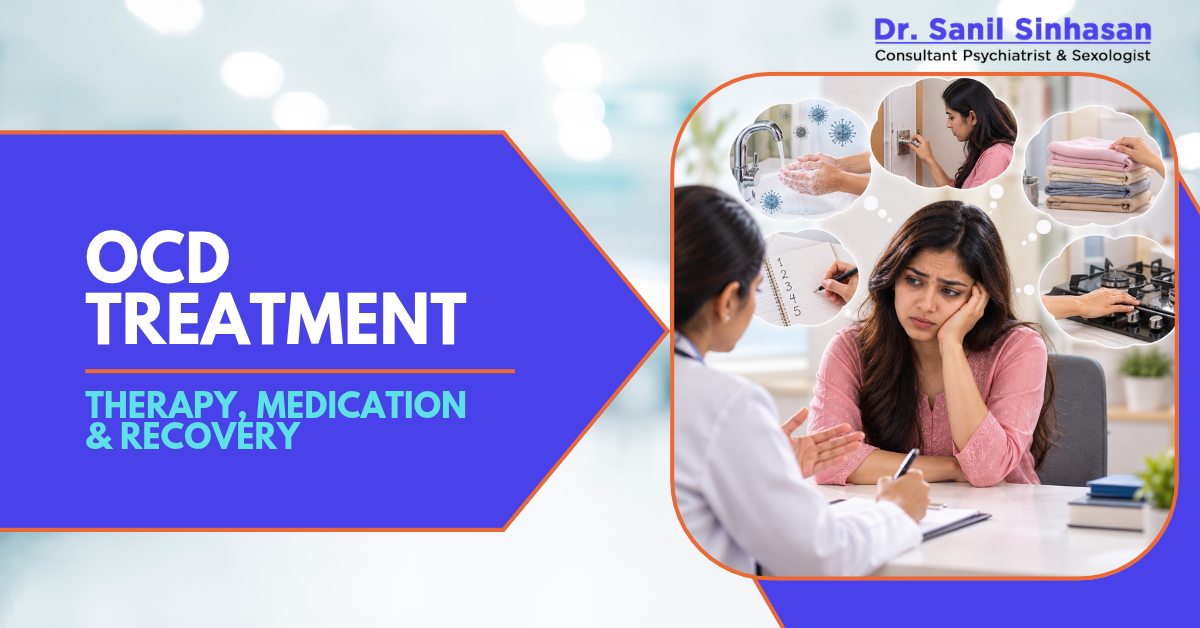
Living with Obsessive-Compulsive Disorder (OCD) can feel exhausting.
An unwanted thought appears. Anxiety increases. You check, wash, count, seek reassurance or perform another ritual. You feel better for a short time.
Then the doubt returns.
If this cycle is interfering with your work, relationships, sleep or everyday life, you may wonder:
Can OCD actually be treated?
Yes. OCD is a treatable mental health condition. Evidence-based treatments can help reduce obsessions and compulsions and improve everyday functioning.
The main treatments for OCD include Cognitive Behavioural Therapy (CBT), particularly Exposure and Response Prevention (ERP), and medication such as Selective Serotonin Reuptake Inhibitors (SSRIs).
Some people benefit from therapy alone. Others may require medication or a combination of both.
Treatment should be individualised according to the severity of symptoms, their impact on daily life, previous treatment response and other mental or physical health considerations.
What Is OCD?
Obsessive-Compulsive Disorder (OCD) is a mental health disorder involving recurring unwanted thoughts, urges or mental images called obsessions and/or repetitive behaviours or mental acts called compulsions.
For example, someone may repeatedly worry:
“What if my hands are contaminated?”
This produces anxiety.
They wash their hands.
The washing provides temporary relief.
Soon the doubt returns.
They wash again.

This can create an OCD cycle:
Obsession → Anxiety or distress → Compulsion → Temporary relief → Obsession returns
Treatment aims to reduce the power of this cycle.
Can OCD Be Treated?
Yes. OCD can be effectively treated and managed.
Treatment may not necessarily mean that a person never experiences another unwanted thought.
Instead, successful treatment can help a person:
- Experience fewer or less intense symptoms
- Respond differently to intrusive thoughts
- Reduce compulsive behaviours
- Spend less time performing rituals
- Avoid fewer everyday situations
- Improve work or academic functioning
- Improve relationships
- Regain time previously consumed by OCD
Improvement can take time.
The goal is not simply to eliminate every uncomfortable thought. Treatment helps people learn that they do not have to respond to those thoughts with compulsions.
What Is the Most Effective Treatment for OCD?
Two of the main evidence-based approaches are:
1. Cognitive Behavioural Therapy with Exposure and Response Prevention (ERP)
ERP is a specialised psychological treatment for OCD.
2. Medication
Certain antidepressant medications, particularly Selective Serotonin Reuptake Inhibitors (SSRIs), are commonly used to treat OCD.
Depending on symptom severity and individual circumstances, treatment may involve:
ERP/CBT alone
or
Medication alone
or
ERP/CBT + medication
A psychiatrist or other appropriately qualified mental health professional can determine which approach is suitable after an assessment.
What Is ERP Therapy for OCD?
Exposure and Response Prevention (ERP) is a specialised form of Cognitive Behavioural Therapy used to treat OCD.
ERP involves two important components.
Exposure
The person gradually faces a thought, object, situation or uncertainty that triggers obsessive fear.
Response Prevention
The person learns to resist or reduce the compulsion they would normally perform to relieve the anxiety.
The process is planned gradually rather than simply forcing someone to face their biggest fear immediately.
How Does ERP Work?
Consider someone who repeatedly checks whether their front door is locked.
Their usual pattern may be:
Lock door → Doubt → Check → Temporary relief → Doubt returns → Check again
During appropriately planned ERP, the person may gradually practise locking the door and resisting repeated checking.
At first, this can feel uncomfortable.
Thoughts may appear:
“What if I didn't lock it properly?”
Instead of immediately checking, the person learns to tolerate the uncertainty and anxiety without performing the usual ritual.
Over time, the urge to perform the compulsion can become more manageable.
The aim is not to prove with absolute certainty that nothing bad will happen.
It is to learn that uncertainty and distress can be tolerated without repeatedly performing compulsions.
What Happens During ERP Therapy?
ERP should be personalised.
Treatment commonly begins by identifying:
- Obsessions
- Compulsions
- Avoided situations
- Mental rituals
- Reassurance-seeking
- Situations that trigger anxiety
The therapist and patient may then organise triggers according to how distressing they feel.
Treatment usually begins with manageable exercises and progresses gradually.
For example, someone with contamination-related OCD might eventually practise touching something they consider contaminated without immediately washing.
Someone with checking OCD might practise leaving home without repeatedly checking appliances.
Someone whose compulsions are primarily mental may work on reducing repeated mental reviewing, counting or reassurance.
The exact exercises depend on the individual's OCD symptoms.
Is ERP Supposed to Make You Anxious?
ERP can initially increase anxiety or discomfort because the person is practising not performing the behaviour they normally use for temporary relief.
That discomfort is not a sign that the therapy is failing.
Treatment is designed to help the person learn new ways of responding to obsessive thoughts and uncertainty.
ERP should be structured and appropriately paced.
Trying to create extreme exposures by yourself is not the goal.
A mental health professional trained in OCD treatment can develop exercises according to the individual's symptoms and level of difficulty.
What Is CBT for OCD?
Cognitive Behavioural Therapy (CBT) examines connections between thoughts, emotions and behaviours.
For OCD, CBT usually includes ERP because compulsions and avoidance are central to maintaining the obsessive-compulsive cycle.
Treatment can help a person identify patterns such as:
- Overestimating danger
- Feeling excessively responsible for preventing harm
- Seeking complete certainty
- Giving excessive importance to intrusive thoughts
- Repeatedly seeking reassurance
- Avoiding triggers
- Performing rituals to reduce anxiety
The objective is not simply to tell yourself that everything will be fine.
Instead, treatment helps you develop a different response to uncertainty, anxiety and intrusive thoughts.
What Medications Are Used for OCD?
Medication may be recommended depending on symptom severity and individual circumstances.
Selective Serotonin Reuptake Inhibitors (SSRIs) are commonly prescribed for OCD.
SSRIs are a type of antidepressant, but their use is not limited to depression.
They can also help reduce OCD symptoms.
Medication should be prescribed and monitored by a qualified medical professional.
How Long Does OCD Medication Take to Work?
OCD treatment usually requires patience.
Unlike medicines that provide an immediate effect, SSRIs may take several weeks to produce meaningful improvement in OCD symptoms.
Some people may need 8–12 weeks before significant improvement becomes apparent.
Treatment for OCD may also involve different dosing considerations from treatment for depression.
For this reason, medication should not be judged as ineffective after only a few days.
The prescribing psychiatrist will consider response, side effects and other clinical factors before deciding whether the treatment needs adjustment.
Can I Stop OCD Medication Once I Feel Better?
Do not stop psychiatric medication suddenly or change the dose without discussing it with your prescribing doctor.
Stopping medication abruptly may cause withdrawal symptoms and can potentially contribute to symptom recurrence.
If you are doing well, your psychiatrist can discuss:
- How long treatment should continue
- Whether medication should be reduced
- How gradually it should be reduced
- What symptoms should be monitored
- How to reduce the risk of relapse
The appropriate duration varies from person to person.
Therapy or Medication: Which Is Better for OCD?
There is no single answer that applies to everyone.
The choice depends on factors such as:
- Severity of OCD
- Time spent on compulsions
- Functional impairment
- Previous treatment
- Other mental health conditions
- Physical health
- Patient preference
- Access to appropriately trained therapy

For some adults with mild to moderate impairment, CBT incorporating ERP or an SSRI may be considered.
When OCD causes severe functional impairment, combined treatment with CBT/ERP and an SSRI may be appropriate.
The treatment decision should be made after individual assessment rather than simply choosing whichever option sounds easier.
Can OCD Be Treated Without Medication?
Yes. Some people with OCD can be treated with psychological therapy without medication.
CBT incorporating ERP is an established OCD treatment.
Whether therapy alone is appropriate depends on factors including:
- Symptom severity
- Functional impairment
- Treatment preference
- Previous response to treatment
- Coexisting mental health conditions
Other people may benefit more from combining therapy and medication.
A psychiatric assessment can help determine an appropriate approach.
What If OCD Does Not Improve With the First Treatment?
Not responding fully to the first treatment does not mean OCD cannot improve.
A clinician may first review several factors:
- Was the diagnosis correct?
- Was ERP actually included in therapy?
- Was therapy sufficiently intensive?
- Was medication taken consistently?
- Was medication tried for an adequate duration?
- Were side effects limiting treatment?
- Are depression, anxiety or other conditions also present?
- Are family members unintentionally participating in compulsions?
Treatment may then need to be adjusted.
This could involve optimising psychological treatment, reviewing medication or using a combined approach.
For severe OCD that remains significantly disabling despite standard treatments, specialist services may consider additional treatment options.
Are TMS or Brain Stimulation Treatments Used for OCD?
Brain stimulation is not usually the first treatment for OCD.
For severe OCD that has not responded adequately to standard evidence-based treatments, specialist clinicians may consider treatments such as certain forms of repetitive Transcranial Magnetic Stimulation (rTMS/TMS).
More invasive approaches are reserved for highly selected, severe and treatment-resistant cases and require specialist evaluation.
Most people seeking treatment for OCD will begin with established psychological treatment and/or medication rather than brain stimulation.
What Does Recovery From OCD Look Like?
Recovery does not necessarily mean never having another intrusive thought.
Unwanted thoughts can occur in people without OCD too.
A more useful sign of recovery is how differently you respond to those thoughts.
Before treatment:
“What if something bad happens? I need to check again.”
With improvement:
“I notice the doubt, but I don't need to perform the ritual.”
Recovery may involve:
- Fewer compulsions
- Less time spent checking or cleaning
- Reduced reassurance-seeking
- Less avoidance
- Greater tolerance of uncertainty
- Improved concentration
- Returning to activities previously avoided
- Better work and relationship functioning
- Greater ability to manage future symptom flare-ups
Progress may be gradual rather than perfectly linear.
Some periods can be easier than others.
Can OCD Come Back After Treatment?
OCD symptoms can fluctuate.
Some people experience periods when symptoms become more noticeable, particularly during stress.
This does not necessarily mean that treatment has failed.
Skills learned during therapy can help people recognise early warning signs and respond before compulsions become increasingly disruptive.
Follow-up care may also be useful for some people.
Can Lifestyle Changes Cure OCD?
Healthy lifestyle habits can support overall mental health, but they should not be presented as substitutes for evidence-based OCD treatment when someone has clinically significant symptoms.
Helpful supportive habits may include:
- Regular sleep
- Physical activity
- Balanced meals
- Stress management
- Maintaining social support
- Reducing harmful alcohol or substance use
These strategies may support well-being, but OCD treatment usually needs to directly address obsessions and compulsions.
Can Family Members Help Someone With OCD?
Yes, but the type of help matters.
Family members naturally want to reduce someone's distress.
This can sometimes lead to repeated reassurance:
“Yes, the door is definitely locked.”
“No, you haven't contaminated anything.”
“I promise nothing bad will happen.”
Although reassurance may reduce anxiety temporarily, repeated reassurance can sometimes become part of the compulsive cycle.
Family members may benefit from learning how to provide emotional support without unintentionally reinforcing rituals.
A therapist can guide families on how to respond appropriately.
How Long Does OCD Treatment Take?
There is no fixed recovery timeline.
The duration of treatment depends on:
- Symptom severity
- Type and number of compulsions
- How long symptoms have been present
- Coexisting conditions
- Consistency with therapy
- Response to medication
- Individual circumstances
ERP usually involves repeated practice both during and between therapy sessions.
Medication may also require several weeks before its effectiveness can be properly assessed.
The goal should be meaningful, sustained improvement rather than expecting an overnight cure.
When Should You See a Psychiatrist for OCD?
Consider professional assessment when obsessions or compulsions:
- Take up significant time
- Cause substantial distress
- Interfere with work or studies
- Affect relationships
- Disrupt sleep
- Cause repeated lateness
- Lead you to avoid everyday activities
- Feel difficult to resist
- Continue despite attempts to stop
Early assessment can help identify whether symptoms are related to OCD or another mental health condition and guide appropriate treatment.
Looking for OCD Treatment in Mumbai?
If intrusive thoughts, repeated checking, excessive cleaning, reassurance-seeking or mental rituals are interfering with your everyday life, professional assessment can help.
Dr. Sanil Sinhasan, MBBS, MD Psychiatry, is a Consultant Psychiatrist & Sexologist in Mumbai with more than 10 years of experience in managing mental and sexual health concerns.
Treatment for OCD should be based on your specific symptoms, their severity, their effect on everyday functioning and any other mental health concerns.
Take the Next Step Towards Managing OCD
You do not have to wait until obsessions and compulsions take over a large part of your day before seeking help.
Evidence-based treatment can help many people manage OCD symptoms and regain greater control over everyday life.
Consult Dr. Sanil Sinhasan, Psychiatrist in Mumbai, for an individual assessment and appropriate OCD treatment guidance.
Consultation locations: Tilaknagar, Chembur and Dadar, Mumbai.
Frequently Asked Questions About OCD Treatment
1. What is the main treatment for OCD?
Evidence-based OCD treatment commonly includes Cognitive Behavioural Therapy incorporating Exposure and Response Prevention (ERP), medication such as SSRIs, or a combination of therapy and medication depending on individual circumstances.
2. What is ERP therapy for OCD?
Exposure and Response Prevention is a specialised form of CBT. A person gradually faces situations or thoughts that trigger obsessions while learning to resist the compulsive behaviour normally used to reduce anxiety.
3. Can OCD be treated without medication?
Yes. CBT incorporating ERP can be used without medication for some people. Others may benefit from medication or combined treatment. The appropriate option depends on symptom severity and individual circumstances.
4. How long does OCD medication take to work?
SSRIs used for OCD may require several weeks to produce meaningful improvement. NIMH notes that antidepressant treatment can take approximately 8–12 weeks before symptoms begin to improve.
5. Does OCD ever completely go away?
OCD is generally considered a long-term condition, but treatment can substantially reduce symptoms and help people function well. Some people experience periods with minimal symptoms, while others need ongoing strategies to manage them.
6. Can OCD return after treatment?
OCD symptoms can fluctuate and may become more noticeable during stressful periods. Skills learned through treatment and appropriate follow-up can help manage recurrence or worsening symptoms.
7. Is medication or therapy better for OCD?
Both ERP-based CBT and medication can be effective. The appropriate treatment depends on severity, functional impairment, previous treatment, individual preference and other clinical factors. More severe OCD may require combined treatment.
8. Can I do ERP therapy myself?
Some lower-intensity CBT/ERP programmes can include structured self-help, but ERP should be appropriately designed for the person's symptoms. If OCD causes significant distress or impairment, treatment with a qualified professional experienced in OCD is advisable.
9. When should I consult a psychiatrist for OCD?
Consider consulting a psychiatrist when intrusive thoughts or compulsions cause significant distress, consume substantial time or interfere with work, studies, relationships, sleep or everyday activities.

 WhatsApp