ADHD vs Anxiety: How Can You Tell the Difference?
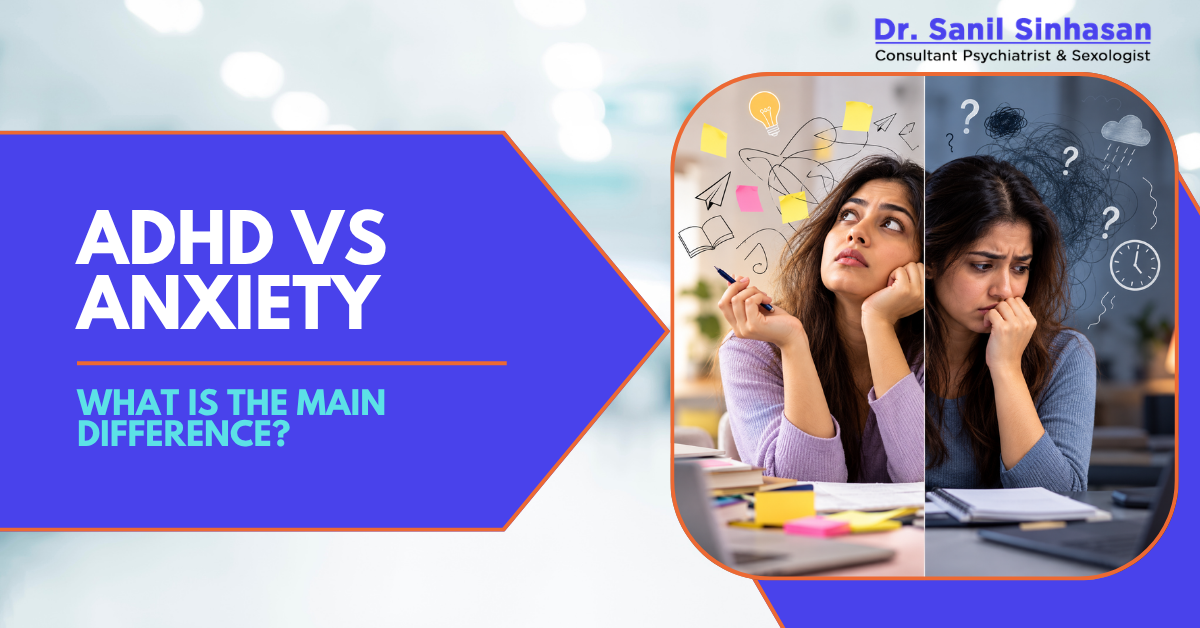
Do you struggle to concentrate because your mind keeps jumping from one thing to another? Or is it difficult to focus because you cannot stop worrying about what might go wrong?
You may feel restless, procrastinate, forget important tasks or find it difficult to relax.
These symptoms can occur with both Attention-Deficit/Hyperactivity Disorder (ADHD) and anxiety.
That can make it difficult to understand what is actually happening.
The key difference is often why the symptoms are occurring, when they started and the pattern they follow over time.
ADHD is a developmental disorder involving persistent difficulties with attention and/or hyperactivity and impulsivity. Anxiety disorders primarily involve excessive fear, worry or apprehension that can interfere with everyday life.
However, ADHD and anxiety can also occur together.
Here is how to understand the similarities and differences.
What Is ADHD?
ADHD is a developmental disorder characterised by persistent patterns of inattention and/or hyperactivity and impulsivity that interfere with everyday functioning.
Although ADHD is commonly associated with children, symptoms can continue into adulthood.
Adults with ADHD may experience difficulties with:
- Maintaining attention
- Organising tasks
- Managing time
- Remembering everyday responsibilities
- Completing tasks
- Controlling impulses
- Sitting still for long periods
- Waiting their turn
- Managing distractions
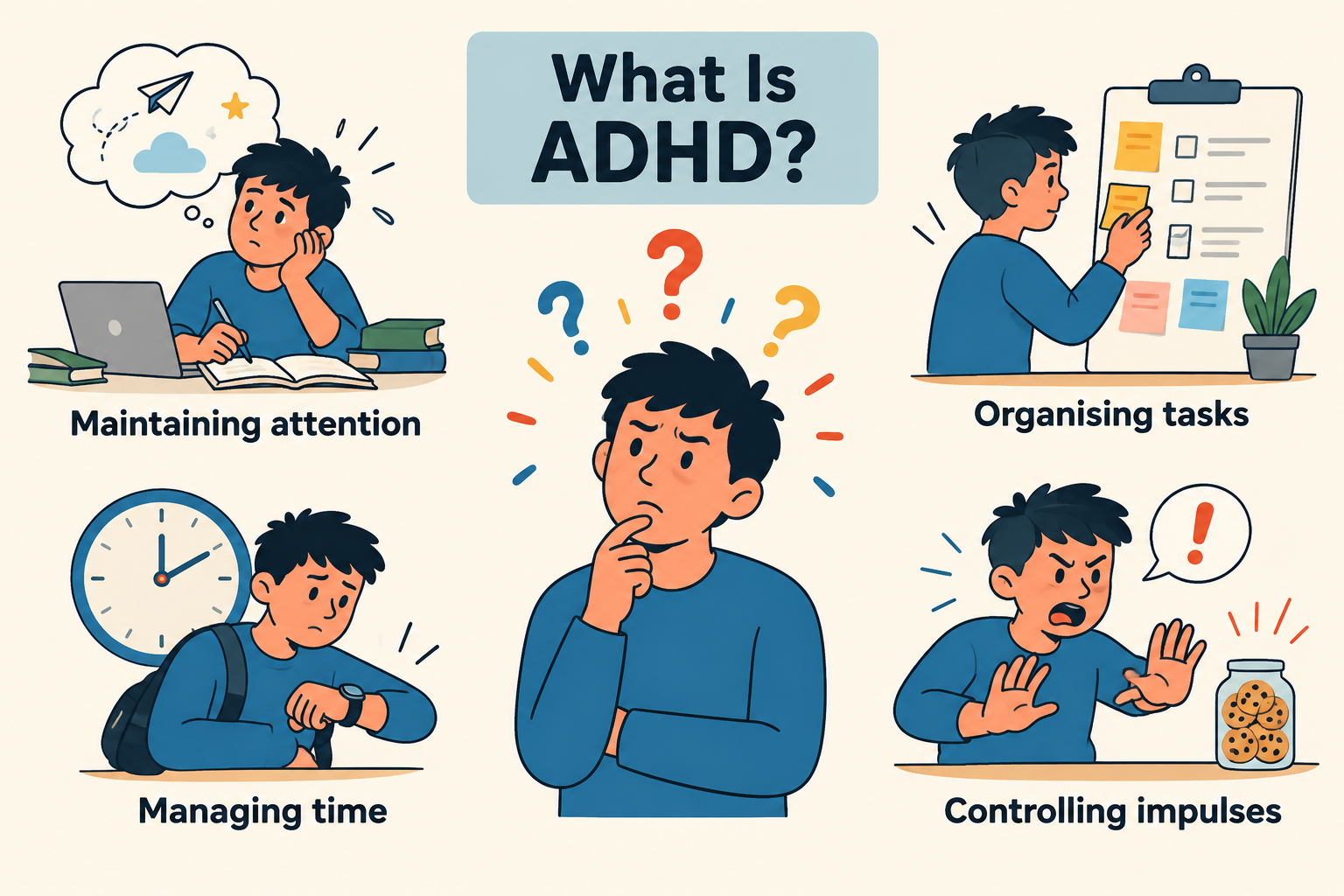
ADHD symptoms begin during childhood, even when the condition is not diagnosed until adulthood.
Some adults may not recognise their symptoms until work, relationships and everyday responsibilities become more demanding.
What Is Anxiety?
Anxiety is the body's emotional response to perceived stress, uncertainty or threat.
Occasional anxiety is a normal part of life.
You may feel anxious before an interview, examination, important presentation or major life decision.
An anxiety disorder is different.
Depending on the type of anxiety disorder, symptoms can involve excessive or persistent fear, worry or nervousness that becomes difficult to control and interferes with daily functioning.
Anxiety symptoms may include:
- Excessive worrying
- Feeling nervous or on edge
- Restlessness
- Difficulty concentrating
- Irritability
- Muscle tension
- Sleep difficulties
- Fatigue
- Rapid heartbeat or other physical symptoms in some situations
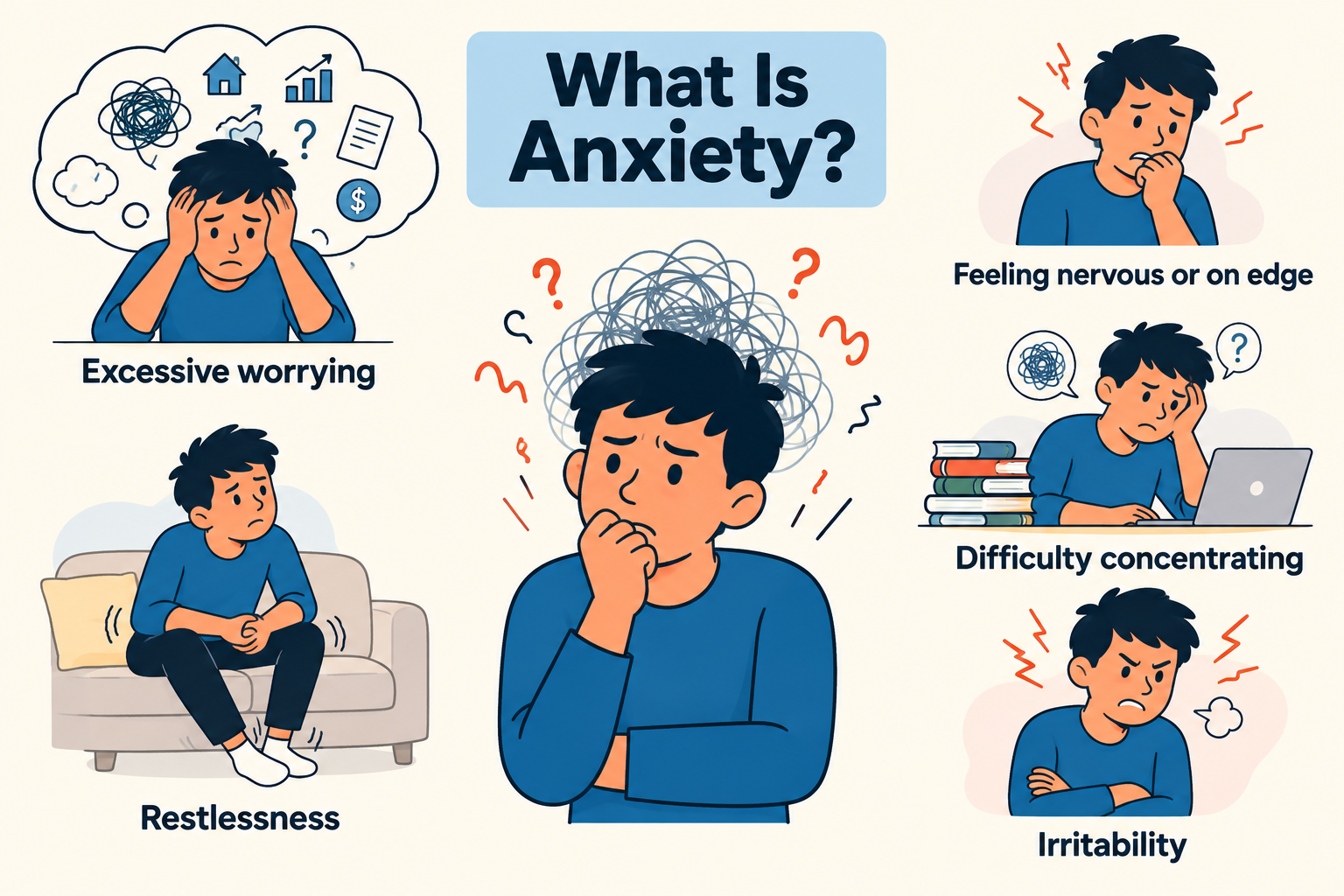
There are several types of anxiety disorders, so symptoms and triggers can differ from person to person.
ADHD vs Anxiety: What Is the Main Difference?
The simplest distinction is:
ADHD primarily involves persistent difficulties with attention regulation, organisation and/or hyperactivity and impulsivity.
Anxiety primarily involves excessive fear, worry or apprehension.
However, real-life symptoms are not always this simple.
For example, both conditions can make concentrating difficult.
A person with ADHD may become distracted because their attention repeatedly shifts to other thoughts, activities or external stimuli.
A person experiencing anxiety may lose concentration because their attention is occupied by worries.
Understanding the reason behind the symptom can therefore be more useful than looking at the symptom alone.
ADHD vs Anxiety: Symptoms Compared
| Symptom | ADHD | Anxiety |
|---|---|---|
| Difficulty concentrating | Often related to distractibility or difficulty sustaining attention | Often related to worry, fear or anxious thoughts |
| Restlessness | May occur without a specific worry | Often accompanies nervousness or feeling on edge |
| Procrastination | May result from difficulty starting, organising or sustaining tasks | May result from fear, worry or avoidance |
| Forgetfulness | Common everyday difficulty | Can occur when worry interferes with concentration |
| Poor organisation | Often a persistent pattern | May occur when anxiety becomes overwhelming |
| Racing/busy thoughts | Attention may shift rapidly between thoughts | Thoughts may repeatedly focus on worries |
| Sleep problems | May occur | Common with persistent anxiety |
| Impulsivity | Can be a central ADHD symptom | Not usually a defining feature of anxiety |
| Excessive worry | May occur, especially with coexisting anxiety | A central feature of several anxiety disorders |
| Childhood history | Symptoms begin during childhood | Anxiety can begin at different stages of life |
These differences are useful clues, but they cannot diagnose ADHD or an anxiety disorder on their own.
7 Questions That Can Help Explain the Difference
1. Why Are You Having Trouble Concentrating?
This is one of the biggest areas of overlap.
With ADHD
You may struggle to maintain attention even when you are not particularly worried.
For example, you may:
- Drift away during conversations
- Jump between tasks
- Get distracted by notifications
- Lose track while reading
- Start several activities without completing them
With Anxiety
Concentration may become difficult because your mind is occupied by worries.
For example:
- “What if I make a mistake?”
- “What if something goes wrong?”
- “What if they judge me?”
You may be trying to work, but your attention repeatedly returns to the feared outcome.
2. Have These Difficulties Been Present Since Childhood?
This is particularly important when assessing ADHD.
ADHD is a developmental disorder.
For an ADHD diagnosis, symptoms must have originated during childhood, even if they were not recognised or diagnosed at that time.
An adult being evaluated for ADHD may therefore be asked about:
- School performance
- Childhood behaviour
- Forgetfulness
- Organisation
- Homework
- Classroom attention
- Impulsive behaviour
Where appropriate, information from old school reports or family members may help provide context.
Anxiety does not have the same requirement for childhood onset.
3. Are You Distracted Even When You Feel Calm?
Imagine that you are relaxed and have nothing particular to worry about.
Can you still struggle to:
- Stay focused?
- Organise your day?
- Finish tasks?
- Remember appointments?
- Keep track of belongings?
If these difficulties are persistent across different situations, a clinician may consider whether ADHD could be contributing.
If concentration difficulties mainly appear during periods of intense worry or stress, anxiety or another cause may need consideration.
This distinction is not absolute, which is why professional assessment is important.
4. Why Do You Procrastinate?
Both ADHD and anxiety can lead to procrastination, but the reasons may differ.
ADHD-related procrastination may involve:
- Difficulty getting started
- Poor time estimation
- Distractibility
- Difficulty organising the task
- Difficulty sustaining attention
Anxiety-related procrastination may involve:
- Fear of making mistakes
- Fear of failure
- Excessive worry about the outcome
- Avoiding situations that trigger anxiety
- Seeking certainty before acting
Ask yourself:
“Am I avoiding this because I cannot get myself organised and started, or because I am worried about what might happen?”
Sometimes, both may be involved.
5. What Does Your Restlessness Feel Like?
ADHD and anxiety can both make someone feel restless.
With ADHD, restlessness may feel like a persistent need for movement or stimulation.
You might:
- Fidget
- Tap your feet
- Change positions frequently
- Find long meetings difficult
- Feel uncomfortable doing nothing
With anxiety, restlessness may be more closely connected to nervousness, tension or worry.
You may feel unable to relax because your mind is anticipating a problem or threat.
6. Are Your Thoughts Distracted or Worried?
Someone with ADHD may describe their thoughts as:
“My brain keeps jumping between different things.”
Someone experiencing anxiety may describe:
“My brain keeps returning to everything that could go wrong.”
Both experiences can feel like having an overly active mind.
However, the content and pattern of thoughts can help clinicians understand what may be driving them.
7. What Happens When the Stressful Situation Ends?
Anxiety symptoms can sometimes become stronger around specific situations, worries or periods of stress.
When the situation improves, some symptoms may decrease.
ADHD follows a more persistent developmental pattern.
Symptoms may become more or less noticeable depending on structure, demands and environment, but the underlying difficulties are not simply limited to one stressful event.
Can ADHD Cause Anxiety?
ADHD and anxiety are separate conditions, but they can occur together.
Living with unmanaged ADHD symptoms can also create stressful experiences.
For example:
- Repeatedly missing deadlines can cause worry.
- Forgetting appointments can create stress.
- Difficulty staying organised can make work feel overwhelming.
- Relationship conflicts caused by forgetfulness or impulsivity may create further anxiety.
However, experiencing anxiety because of everyday difficulties does not automatically mean someone has an anxiety disorder.
A clinician needs to assess the complete pattern.
Can You Have ADHD and Anxiety at the Same Time?
Yes. ADHD and anxiety can coexist.
Having one condition does not rule out the other.
For example, someone may have longstanding ADHD symptoms involving organisation, attention and impulsivity while also experiencing persistent excessive worry consistent with an anxiety disorder.
When both conditions occur, treatment needs to consider both rather than assuming that every symptom comes from a single diagnosis.
ADHD, Anxiety or Both? An Everyday Example
Consider two people who repeatedly miss work deadlines.
Person A
They intend to start early but become distracted.
They underestimate how much time the work requires.
They switch between tasks.
They eventually realise the deadline is tomorrow.
This pattern has existed since school.
ADHD may be one possibility worth assessing.
Person B
They understand exactly what needs to be done.
But every time they begin, they worry:
“What if this isn't good enough?”
They repeatedly check their work and delay submitting it because they fear making a mistake.
Anxiety may be contributing.
Person C
They struggle with organisation and distractibility and experience excessive worry about their performance.
It is possible for ADHD and anxiety to coexist.
These examples illustrate patterns only. They are not diagnostic tests.
Is Overthinking ADHD or Anxiety?
Overthinking is not specific to either condition.
However, persistent worry and repeatedly thinking about possible negative outcomes are commonly associated with anxiety.
Someone with ADHD may also experience a busy mind or rapidly shifting thoughts.
The distinction depends on the nature of the thoughts, associated symptoms, developmental history and impact on daily functioning.
Overthinking alone cannot determine whether you have ADHD or anxiety.
Is Forgetfulness ADHD or Anxiety?
It can occur with either.
Adults with ADHD may frequently:
- Forget appointments
- Lose belongings
- Forget everyday tasks
- Miss deadlines
- Forget instructions
Someone experiencing significant anxiety may also become forgetful because much of their attention is occupied by worry.
Sleep deprivation, depression, chronic stress and medical problems can also affect concentration and memory.
Therefore, forgetfulness alone is not enough to diagnose ADHD.
Can an Online ADHD Test Tell Me Whether I Have ADHD or Anxiety?
Online questionnaires can sometimes help identify symptoms that deserve further evaluation.
They cannot provide a complete diagnosis.
ADHD assessment requires consideration of:
- Current symptoms
- Childhood symptoms
- Duration
- Functional impairment
- Symptoms across different settings
- Mental health history
- Medical history
- Other possible explanations
A questionnaire should therefore be considered a screening tool rather than a substitute for clinical assessment.
How Are ADHD and Anxiety Diagnosed?
There is no single blood test or brain scan that independently determines whether someone has ADHD or an anxiety disorder.
A mental health assessment may examine:
- What symptoms you experience
- When the symptoms began
- How long they have been present
- Situations in which they occur
- Childhood history
- Work or academic functioning
- Relationships
- Sleep
- Medical history
- Mental health history
- Substance use where relevant
- Other possible causes of symptoms
For suspected adult ADHD, developmental history is especially important because ADHD symptoms originate in childhood.
The clinician may also use validated questionnaires or rating scales as part of the assessment.
How Are ADHD and Anxiety Treated?
Treatment depends on the diagnosis, severity of symptoms, medical history and individual circumstances.
ADHD Treatment
Management may include:
- Medication when clinically appropriate
- Psychological interventions
- Behavioural strategies
- Organisational skills
- Time-management strategies
- Structured routines
- Lifestyle and sleep support
Anxiety Treatment
Depending on the type and severity of anxiety, management may involve:
- Psychotherapy
- Cognitive Behavioural Therapy (CBT)
- Stress-management strategies
- Lifestyle changes
- Medication when clinically appropriate
If ADHD and anxiety occur together, treatment should be individualised to address both conditions.
When Should You Consult a Psychiatrist?
Consider seeking an assessment if problems with attention, anxiety, organisation, impulsivity or worry are persistent and interfere with:
- Work
- Studies
- Relationships
- Sleep
- Daily responsibilities
- Decision-making
- Emotional well-being
You should also consider professional help if you have spent months trying to manage the symptoms yourself without meaningful improvement.
A psychiatric evaluation can help identify whether your symptoms are related to ADHD, anxiety, both conditions or another cause.
Looking for ADHD or Anxiety Assessment in Mumbai?
If you are unsure whether persistent concentration difficulties, restlessness, procrastination or feeling overwhelmed are related to ADHD, anxiety or another mental health concern, an individual psychiatric assessment can provide greater clarity.
Dr. Sanil Sinhasan, MBBS, MD Psychiatry, is a Consultant Psychiatrist & Sexologist in Mumbai with more than 10 years of experience in treating mental and sexual health concerns.
A detailed assessment considers your symptoms, their duration, developmental history and impact on everyday life before recommending an appropriate management plan.
Understand the Cause, Not Just the Symptoms
ADHD and anxiety can look similar on the surface, but treatment depends on understanding what is actually contributing to your difficulties.
Consult Dr. Sanil Sinhasan, Psychiatrist in Mumbai, for an individual mental health assessment and appropriate treatment guidance.
Consultation locations: Tilaknagar, Chembur and Dadar, Mumbai.
Frequently Asked Questions
1. How can I tell if I have ADHD or anxiety?
ADHD commonly involves persistent difficulties with attention, organisation and/or impulsivity that begin during childhood. Anxiety primarily involves excessive fear, worry or apprehension. Because symptoms can overlap, a professional assessment is the appropriate way to distinguish them.
2. Can anxiety look like ADHD?
Yes. Anxiety can cause restlessness, poor concentration, sleep difficulties and problems completing tasks, which can resemble ADHD symptoms.
3. Can you have ADHD and anxiety together?
Yes. ADHD and anxiety can occur together. A comprehensive assessment can determine whether one or both conditions may be contributing to your symptoms.
4. Does ADHD cause overthinking?
Some people with ADHD describe busy or rapidly changing thoughts. However, overthinking is not specific to ADHD and can also occur with anxiety, depression and stress.
5. Is procrastination a symptom of ADHD or anxiety?
It can occur with both. ADHD-related procrastination may involve difficulties with attention, organisation or getting started. Anxiety-related procrastination may be driven by worry, fear of failure or avoidance.
6. Can anxiety cause forgetfulness?
Yes. Persistent anxiety can interfere with concentration and make remembering information or everyday tasks more difficult. Forgetfulness can also have many other causes.
7. Does ADHD always begin in childhood?
ADHD is a developmental disorder. Current diagnostic criteria require several symptoms to have been present before age 12, although the condition may not be formally diagnosed until adulthood.
8. Should I see a psychiatrist for ADHD or anxiety?
Consider consulting a qualified mental health professional if problems with attention, worry, restlessness, organisation or impulsivity are persistent or interfere with work, relationships, studies, sleep or everyday functioning.

 WhatsApp